How Cross-Border Sellers Can Use Niceggie to Optimize Luxury, Collectible, and Refurbished eBay Listings as High-Value Categories Grow

The signal from eBay has been clear lately: high-value categories are becoming a growth priority. According to reports, eBay projected third-quarter revenue of $3.07 billion to $3.12 billion, and the core segments driving that outlook include luxury goods, collectibles, and refurbished products; during the same period, its stock had also risen more than 25% year to date. That shows the platform is not simply chasing more SKUs. It is shifting resources toward categories with higher average order values and stronger trust requirements.
For cross-border sellers, the key to this opportunity is not "listing faster," but "communicating information more accurately." The conversion logic for high-value products differs from that of standard items. Before placing an order, buyers usually care less about flashy copy and more about whether you have clearly explained authenticity, condition, version, accessories, rarity, warranty, and after-sales boundaries. The more vague the information is, the higher the bounce rate usually becomes. The more specific the information is, the easier it is for buyers to decide whether the item is worth buying.
This article walks you through a practical framework for optimizing eBay listings in high-value categories, with a focus on three product types:
- Luxury goods: buyers care about proof of authenticity, wear details, production year, and accessory completeness
- Collectibles: buyers care about version details, serial numbers, preservation condition, and market rarity
- Refurbished products: buyers care about testing procedures, replaced parts, functional condition, and warranty terms
By the end, you will have an actionable review framework you can use right away. You can follow the steps to rewrite titles, fill in selling-point keywords, and improve how your main and detail images communicate value. You can also use Niceggie's Listing AI to generate a first draft of your copy and image plan, then review and test it manually. The result is not a vague set of suggestions, but a version of your high-value listing that is better suited for launch or A/B testing.
Before You Start, Confirm These Basics
Gather the product facts first, then revise the listing. High-value categories suffer most from incomplete information. Good copy cannot replace missing evidence.
At minimum, you should prepare:
- 1 item currently listed on eBay or ready to be listed
- Basic product information: brand, model, version, specifications, year, country of origin, accessory list
- Condition or refurbishment grade details
- 5-8 real product photos, including details, flaws, accessories, and packaging
- Links or screenshots for 5-10 comparable competing products from the past 30 days【To be added: if you need marketplace competitor examples, please specify the category】
- Your own bottom-line information: minimum gross margin, acceptable return conditions, and shipping lead time
If you have not fully sorted out your after-sales rules yet, it is also worth reviewing Niceggie's AI Customer Service. In high-value categories, common inquiries focus on authenticity, shipping, accessories, and after-sales support. Preparing your response standards in advance helps reduce disputes caused by overpromising in the listing.
Step 1: Identify What Kind of "High-Value Selling Point" Your Product Has

Classify first, then write the copy. Luxury goods, collectibles, and refurbished products all fall into high-value categories, but buyers do not focus on the same things.
How to do it: place your product into one of the three groups below.
- Luxury goods
- Key information: brand, authenticity, condition, accessories, source of purchase
- Top buyer concerns: whether it is authentic, whether wear is shown honestly, whether the box and certificate are included
- Collectibles
- Key information: version, year, serial number, limited edition status, preservation condition
- Top buyer concerns: whether it is rare, whether there are version differences, whether there are flaws
- Refurbished products
- Key information: refurbishment grade, inspection items, battery/core component status, warranty
- Top buyer concerns: whether it is stable and usable, how it compares with a brand-new item, and whether returns or exchanges are easy
Expected result: you should be able to write a one-sentence product position, such as "a pre-owned accessible luxury bag with verifiable provenance," "a limited-edition collectible card with a clearly shown serial number," or "a refurbished pair of headphones that has completed basic inspection." That sentence will directly determine your title structure and the order of your selling points.
Step 2: Change the Title from "Keyword Stacking" to a "Search Terms + Decision Terms" Structure
For high-ticket eBay listings, the title must first be searchable, then make buyers feel confident enough to click. If you only write the brand name and a string of attributes, click-through rates usually will not stay stable.
How to do it: rewrite the title in this order.
- Core search terms
- Brand / series / model / category
- Decision terms
- Condition, year, version, size, capacity, serial number, refurbishment grade
- Risk-reduction terms
- With Box, Authenticated, Tested, Refurbished, Complete Set【To be added: whether to use these English terms depends on the actual condition of your product】
Example structures:
- Luxury goods: Brand + Model + Size + Condition + Accessories
- Collectibles: Year + Series + Variant + Grading/Condition + Number
- Refurbished products: Brand + Model + Storage/Spec + Refurbished Grade + Tested
Why this works: buyers spend very little time on the search results page. They need to see the search core first before they continue judging credibility.
Expected result: your title will no longer feel empty, and buyers will be able to tell at a glance what the item is, what condition it is in, and whether it is worth clicking. If repeatedly editing by hand in your browser is inefficient, you can borrow the workflow mindset from Niceggie's store operation tools beyond TikTok Creator Outreach and organize your materials first. Listing AI's Chrome extension can diagnose and rewrite within your existing workflow, but this article does not include an internal link to a page without a public landing_url to avoid misleading readers.
Step 3: Change Selling Points from "Feature Descriptions" to a "Purchase Obstacle Checklist"
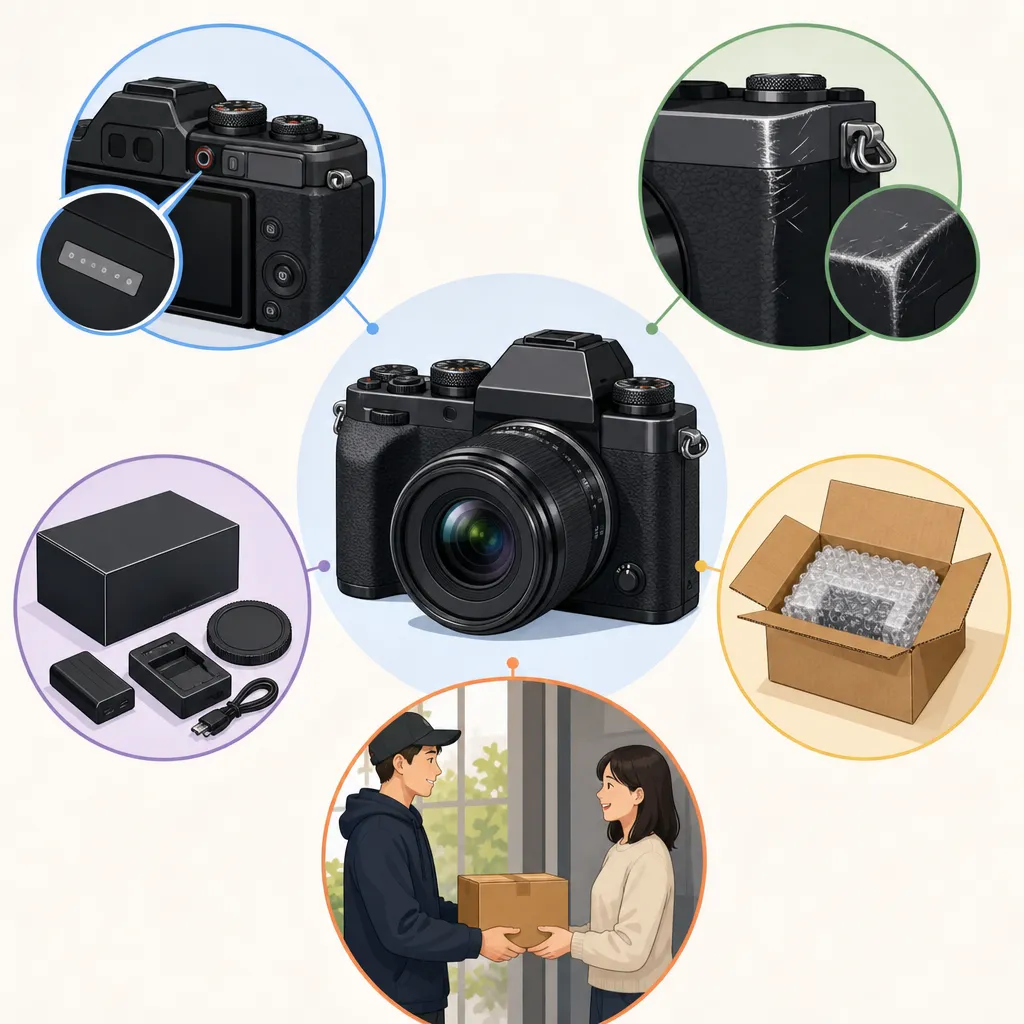
For high-value products, better selling points do not come from saying more. They come from answering the buyer's biggest concerns first. What you need to write is not a standard consumer product manual, but a risk explanation.
How to do it: arrange your bullet points in this order.
- Product identity
- Brand, model, version, year, serial number, size
- Product condition
- Condition, flaw location, degree of wear, whether it is refurbished, and inspection completion status
- What is included
- Box, certificate, accessories, invoice, replacement parts, charger
- Shipping and after-sales support
- Shipping lead time, packaging method, return boundaries, warranty scope
- Suitable audience or use scenarios
- Collecting, gifting, daily use, backup device, entry-level option
Why this works: high-ticket buyers look for possible problems before they look for pleasant surprises.
Expected result: the five selling points you write will read more like a transaction guide than generic ad copy. For example, for refurbished products, do not just write "good performance." Write "basic functional testing completed, with minor visible signs of use; see images for details." For collectibles, do not just write "rare." Write the specific version, serial number, or year information.
Step 4: Use Images as Proof, Not Just Decoration
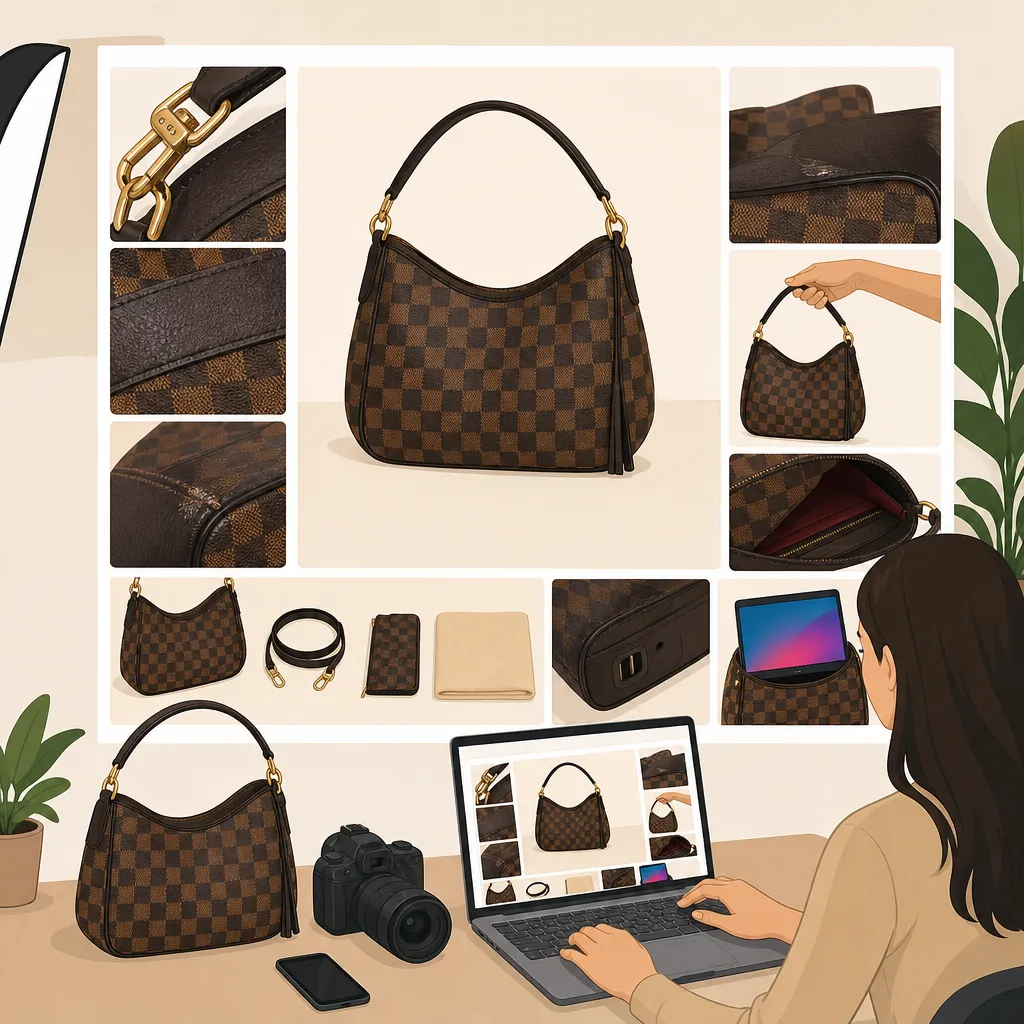
In high-value categories, images carry the burden of evidence. This is especially true for luxury goods and collectibles. The more your images feel like a detail archive, the less back-and-forth you will get in private messages.
How to do it: prepare a fixed set of shots.
- Main image: full front view with a clean background
- Detail images: logo, hardware, stitching, material texture, ports, nameplate, labels
- Flaw images: scratches, dents, fading, packaging damage
- Accessory images: box, certificate, manual, spare parts
- Comparison images: size comparison, in-hand photo, grouped photo
- Result images: for refurbished products, you can add a display of the "powered-on / post-inspection condition"【To be added: the exact display method should be confirmed based on eBay category rules】
Why this works: many returns for high-priced products happen not because the product is actually defective, but because what the buyer received does not match what they expected.
Expected result: your images will shift from simply looking good to actually answering questions. If you are also driving traffic through TikTok Shop, you can later reuse the same set of assets with TikTok Creator Outreach as product selection material for creator partnerships, which reduces repeated requests from creators for assets.
Step 5: Compare Against Competitors and Find the One Difference You Should Emphasize
Do not compare yourself against every competitor. Start with 5-10 competing products in the same price range, then choose the one difference you can support most convincingly. The biggest mistake in high-value categories is trying to say everything.
How to do it: make a simple comparison table and review at least these five items.
| Item | Your product | Common competitor wording |
|---|---|---|
| Does the title clearly state the version/condition? | Yes/No | Yes/No |
| Do the images show flaws? | Yes/No | Yes/No |
| Are the accessories complete? | Yes/No | Yes/No |
| Does it explain inspection or provenance? | Yes/No | Yes/No |
| Are after-sales boundaries clear? | Yes/No | Yes/No |
Why this works: what actually affects conversions is often not that you added 20 more keywords, but that you removed one major concern earlier than competing listings did.
Expected result: you will end up with a clear position, such as "more complete accessories at the same price," "more complete inspection details than similar refurbished units," or "clearer version information than other collectibles in the same series." After that, keep your title, selling points, and images centered on that one point instead of scattering your message.
Step 6: Run a Risk-Term Check Before Publishing
The last step is not polishing. It is risk removal. High-value categories are more likely to trigger disputes because of exaggerated wording.
How to do it: check these four kinds of statements one by one.
- Absolute promises
- Such as "lowest price online," "guaranteed to hold value," or "100% flawless"
- Authenticity claims without evidence
- Such as "officially certified" without corresponding proof
- Vague condition wording
- Such as "great condition" without images and details
- Unclear refurbishment descriptions
- Such as "like new" without explaining the refurbishment scope and inspection status
Why this works: once a high-ticket dispute happens, the platform and the buyer will first look at what you wrote.
Expected result: your listing copy will be more stable, and your pre-sale communication cost will also drop.
Common Mistakes and Troubleshooting
Most problems do not come from the tools. They come from your materials and your messaging standards. First check whether the information is complete, then look at how it is expressed.
Error 1: The title looks packed, but impressions and clicks are still average
The usual reason is that the search terms are too scattered, or the selling-point words are placed where buyers do not care.
Solution:
- Remove repetitive adjectives
- Move the brand, model, and version to the front
- Keep only one strongest differentiator, and do not cram in "rare," "premium," "collector-grade," and "trending" all at once
Error 2: Buyers keep asking about authenticity, condition, or accessories
The usual reason is that the images and bullet points do not fully explain the risk points.
Solution:
- Add close-up photos of flaws
- List the accessories separately
- Move the "provenance / inspection / refurbishment explanation" into the first two selling points
Error 3: The refurbished product page looks professional, but conversion is still low
The usual reason is that you described many functions, but did not answer why the product is worth the price.
Solution:
- State the refurbishment grade clearly
- Specify what has been inspected
- Add the reason to buy it compared with a brand-new product and with an ordinary used product
After You Finish This Round, What Comes Next
Optimize one SKU first, then replicate the process to similar products. Do not rewrite your whole store at once. Start with products that have higher prices, more inquiries, and greater return risk, because listing optimization tends to show results fastest there.
If your eBay store also operates across multiple marketplaces, you can extend this review method to product pages on Amazon, Walmart, and TikTok Shop. The underlying logic of high-value categories is very similar: buyers judge risk first, then price, and only after that do they look at style and wording.
Want to Align Your Pre-Sales and After-Sales Messaging First?
If you have already started optimizing high-ticket listings, the next step is to see how Niceggie's AI Customer Service handles frequent questions about authenticity, shipping, returns, and exchanges. When your product page and customer service replies follow the same standards, disputes later on become much less frequent.
FAQ
For eBay high-value categories, should I improve the title or the images first?
Start with the title structure, then add image-based proof. The title determines whether buyers click in, while the images determine whether they feel confident enough to place an order. You need both.
Can luxury goods, collectibles, and refurbished products use the same listing template?
You can use the same review framework, but the copy focus should differ. Luxury goods depend on authenticity and condition, collectibles depend on version and rarity, and refurbished products depend on inspection and after-sales support.
Why do high-ticket products tend to generate so many private messages?
Because buyers worry that the information is incomplete, especially around condition, accessories, provenance, and after-sales boundaries. As long as you explain these points clearly in the title, selling points, and images, inquiry volume usually drops.
How should I write selling points for refurbished products in a safer way?
Do not just write "good condition" or "like new." A safer approach is to clearly state the refurbishment grade, inspection items, visible flaws, and after-sales coverage.
Is this method only suitable for sellers who focus on eBay?
No. It is not limited to eBay. If you sell products with high ticket prices, long decision cycles, and buyers who repeatedly confirm details, this method also works on other platforms.