After Newegg launches conversational AI shopping, how can cross-border sellers use AI Presales Agent to handle high-intent inquiries and improve conversion?
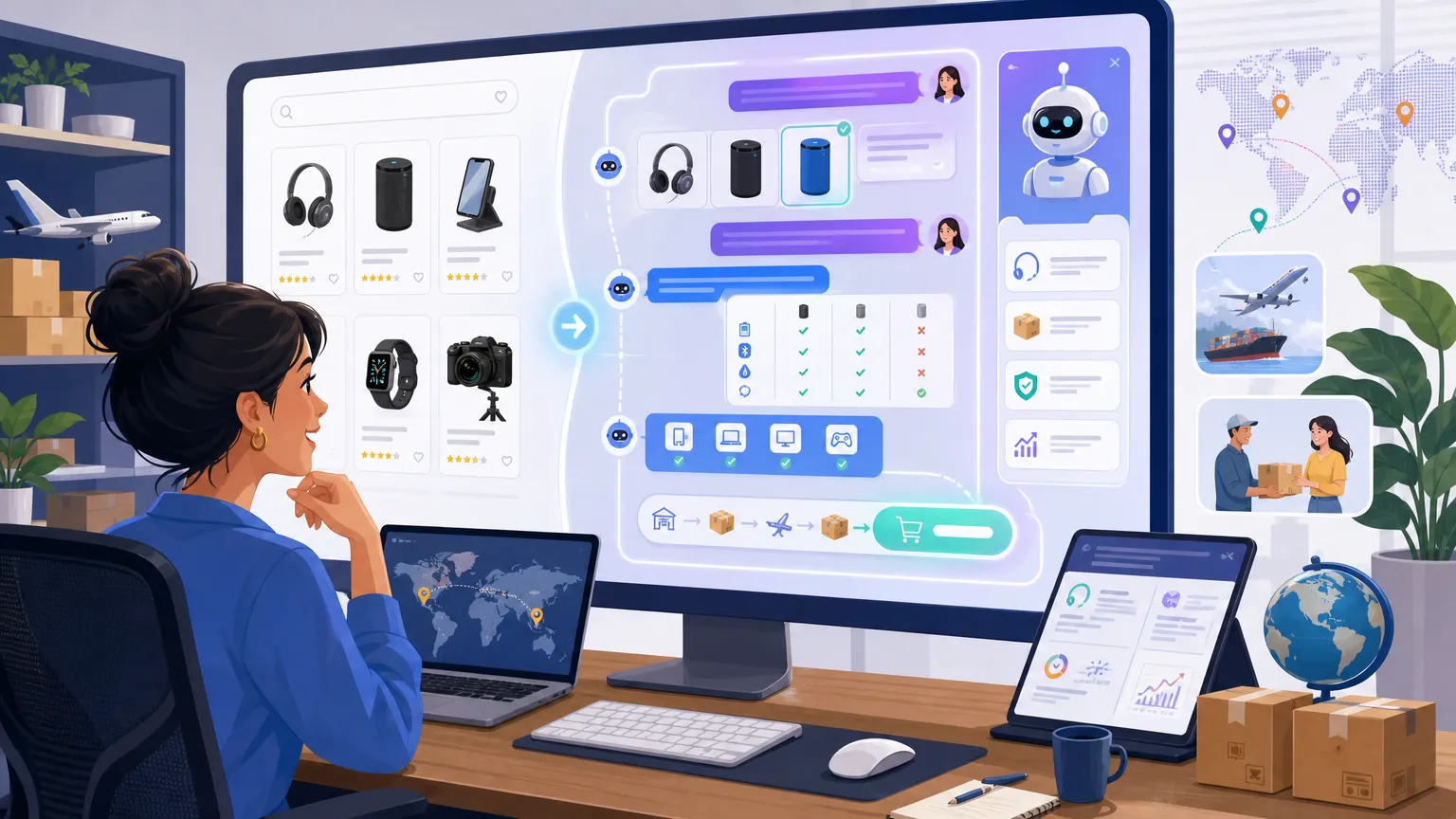
After Newegg launches conversational AI shopping, what really gets hit is sellers' presales response
Newegg has pushed "searching for products" one step toward "conversational shopping," and that will directly change how sellers capture traffic. On June 26, 2026, Newegg officially launched a new conversational AI shopping experience, accessible at newegg.com/ai, with the goal of letting buyers describe their needs in one natural-language sentence and refine them through conversation until checkout, without leaving the chat to search again.
The signal here is clear: when the platform starts shortening the decision path for buyers, the inquiries sellers face are no longer broad questions like "Is it in stock?" but specific questions much closer to the moment before purchase. For cross-border sellers, the real pressure is not customer acquisition itself, but whether they can handle these high-intent customer interactions quickly and accurately.
Regional ecommerce data also shows how urgent this trend is. According to official disclosures from TikTok Shop, during the 2025 6.6 major promotion in Southeast Asia, GMV increased 123% year over year, while the growth rates for Double 11 and Double 12 reached 230% and 270% respectively. This shows at least two things: traffic has not disappeared, and conversion efficiency matters more than before; during major promotions, human customer service and manual presales support are often the first parts of the chain to break under pressure.
Presales response is the part this update really affects
Many people see updates like this from Newegg as front-end experience improvements, but the more practical impact for sellers is this: buyer questions will become more concentrated, more specific, and less forgiving.
The reason is simple. After buyers complete initial screening in a conversational setting, they usually ask only a few key questions: whether specifications are compatible, how warranty claims work, whether shipping times are stable, or whether a certain version fits their use case. Whoever can give a credible answer within seconds has a better chance of winning the order; if the team still relies on manually scrolling through chat logs, checking product pages, and opening spreadsheets, it becomes much easier to lose the sale.
In other words, platform-side conversational AI is turning "presales consultation" from a supporting step into the main battleground for conversion. If sellers focus only on ads, pricing, and listings, they may miss the step closest to payment.
There are fewer questions, but they are harder to bluff through
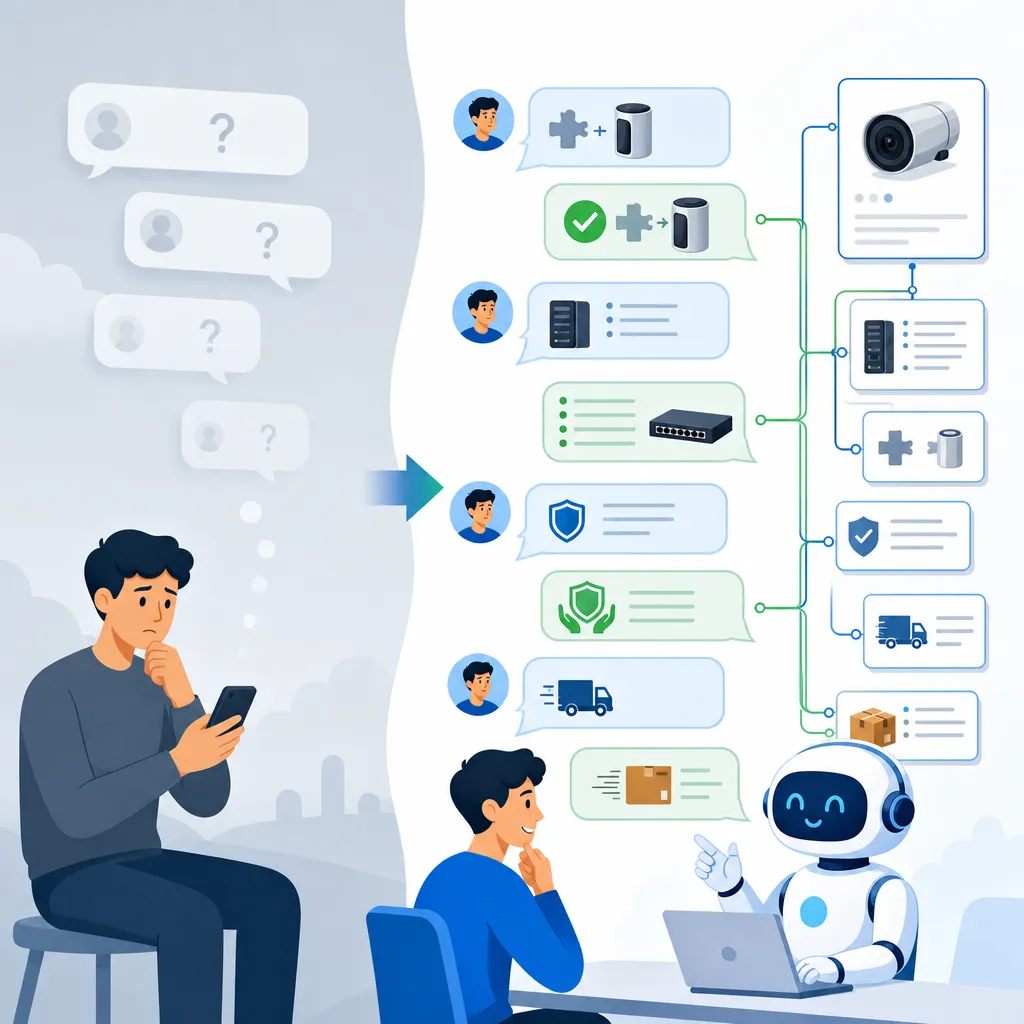
Conversational AI shopping reduces low-quality questions, and the ones that remain are often much closer to conversion. In traditional on-site inquiries, common questions include "What is this?" or "Where can I buy it?" with very little information value; after conversational product guidance, buyers have usually finished the initial filtering, and what remains are questions about compatibility, specification differences, and after-sales coverage that directly affect payment.
This means presales answers cannot stop at simply "responding"; they have to be accurate. If a seller gives vague answers, or if the wording is inconsistent from one reply to another, buyer hesitation gets amplified and conversion drops. Newegg's public messaging around this launch emphasizes simplifying the shopping process from search to checkout, which itself shows that the platform wants to reduce decision friction.
For sellers, a more suitable approach is to organize product knowledge, specification differences, compatibility relationships, and after-sales policies into a callable knowledge base, then let the AI Presales Agent handle high-frequency product questions. The value here is not the word "automation" itself, but making answers stable and reducing errors caused by ad hoc human responses.
Once major promotions begin, human customer service is the first to crack

When traffic becomes more volatile, the first problem exposed in manual presales is not cost, but delay. TikTok Shop Southeast Asia 6.6 Promotion GMV increased 106% year over year, showing that major ecommerce promotions in Southeast Asia still have strong breakout power. Once inquiry volume surges in a short period, human teams typically run into three problems: reply queues, inconsistent answers, and no overnight coverage.
All three hurt conversion, especially in cross-border scenarios. Buyers ask questions across time zones, and if the seller replies the next day, the conversion window is often already gone; if a new service agent is unfamiliar with the specifications and gives a vague answer, the buyer may go back to search results and keep comparing prices; when multiple platforms operate at the same time, the same SKU can have different rules, wording, and promise boundaries across marketplaces, and manual switching is where mistakes happen most easily.
So the role of presales AI is not to replace all humans, but to handle high-frequency, standardized, verifiable questions first. Complex cases can then be escalated to human staff, which actually makes the team lighter. Around this, sellers usually need to use it together with the AI Customer Service Assistant so presales and after-sales FAQs can be managed separately, reducing the cost of switching tasks during peak campaigns.
Listings and presales must say the same thing
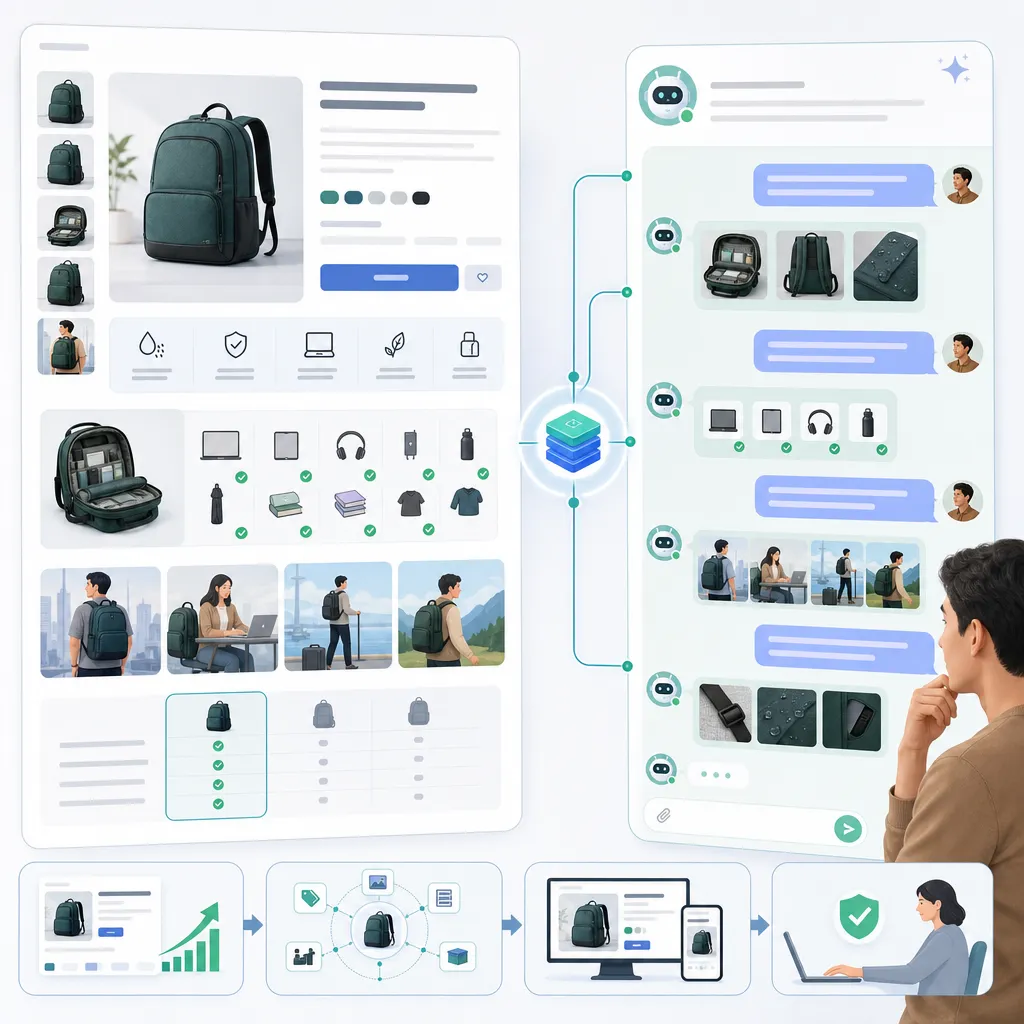
If the listing is unclear, even strong presales follow-up only patches holes. Conversational shopping pushes buyers toward clearer expressions of need, and at that point the clarity of the product title, selling points, and parameter structure directly affects the buyer's judgment before they even ask a question.
A common example: if an electronics accessory does not clearly state compatible models, interface standards, and usage limits in the main copy, buyers in a conversational setting will likely keep asking follow-up questions. On the other hand, if the listing already makes the core differences clear, the presales AI only needs to add boundary conditions and specific usage suggestions, and the conversion path becomes much shorter.
This is why sellers cannot treat listing optimization and presales handling as separate tasks. First use AI Listing to diagnose the structure of titles, selling points, and descriptions, then let the presales bot answer questions based on the same knowledge base, and it becomes much easier to keep the message consistent. For cross-border sellers, that consistency affects buyer trust; for seller teams, it reduces rework.
Who is affected most
For practitioners
The boundaries between operations, customer service, and product selection will move closer together. In the past, customer service handled questions, operations handled conversion, and product selection handled specification materials; now conversational shopping raises the bar for information accuracy, and all three need to share one standard set of answers.
If a team is still relying on scattered spreadsheets, product detail pages, and individual customer service experience to support presales, it is hard to stay stable over the long term. A more realistic operating model is to let operations organize selling points, let product selection confirm specifications, and let customer service focus only on exceptions.
For companies
Companies will recalculate "conversion loss" instead of looking only at "customer service labor cost." Many teams adopted automation tools in the past to hire fewer people; next, the bigger calculation may be how many high-intent orders they have been losing.
This matters even more for sellers operating across platforms. Amazon, Shopify, TikTok, Newegg, Walmart, and other channels all have different rules, and buyer expectations differ as well. Without a unified AI operations platform, companies can easily end up with growing front-end traffic while back-end response falls behind.
For consumers
Buyers will get more used to asking first and ordering later, and they will tolerate vague answers less. As platforms train users to complete screening through conversation, consumers will assume sellers can give answers closer to a consultative response, rather than just copying and pasting a manual.
That leads to a direct result: response speed and answer credibility will become competitive factors alongside price. Lower prices no longer automatically mean an advantage, and unclear explanations can still lose the sale.
How we see it
This wave of change looks more like an upgrade to presales infrastructure than a simple tool replacement. For cross-border ecommerce sellers, the path that usually works is three steps: organize the knowledge base first, then unify listing and Q&A messaging, and finally use AI to handle high-frequency inquiries. The focus is not chasing a new concept, but reducing buyer hesitation, shortening response time, and improving conversion rates while freeing the team to focus on complex issues and business growth.
Want to try turning your product knowledge base into a presales capability that can directly handle inquiries? Take a look at whether Niceggie's AI Presales Agent fits your team's workflow.
Are sellers ready?
Platforms are getting better at "helping buyers ask questions." Are sellers ready to "make the answers clear"? If conversational AI shopping becomes a default capability across more marketplaces, then whether your presales system amplifies traffic value or becomes a conversion bottleneck is a question you will have to face very soon.
FAQ
What direct relationship does Newegg conversational AI shopping have with sellers?
It makes buyer inquiries more focused and closer to the ordering stage. What sellers really need to deal with is a higher volume of high-intent questions, with both response speed and accuracy needing to keep up.
What kinds of questions is AI Presales Agent better suited to handle?
It is well suited for high-frequency, standardizable questions such as specifications, compatibility, use cases, shipping explanations, and after-sales boundaries. Complex individual cases can then be handed to human staff for more stable efficiency.
Is it enough to optimize listings without using presales AI?
You can do that, but the result is usually incomplete. Listings reduce basic questions, while presales AI handles the final round of confirmation before purchase. The two work better together.
During major promotions, which step is most likely to lose orders?
Usually delayed replies and inconsistent answers. Once inquiries pile up, buyers can easily switch to another seller, especially when operating across time zones and multiple platforms at the same time.
Will this kind of change happen only on Newegg?
Not necessarily. Newegg's move looks more like a clear signal that platforms are pushing the shopping process toward conversational decision-making, and other marketplaces may adjust the experience in a similar direction.
Sources
- Newegg 官方发布(BusinessWire,2026年6月26日)
- TikTok Shop 东南亚跨境电商年度峰会披露数据(2026年5月)