How to Sell Globally with TikTok Shop: A Repeatable Growth Playbook from Creator Partnerships to Product Conversion
Goal
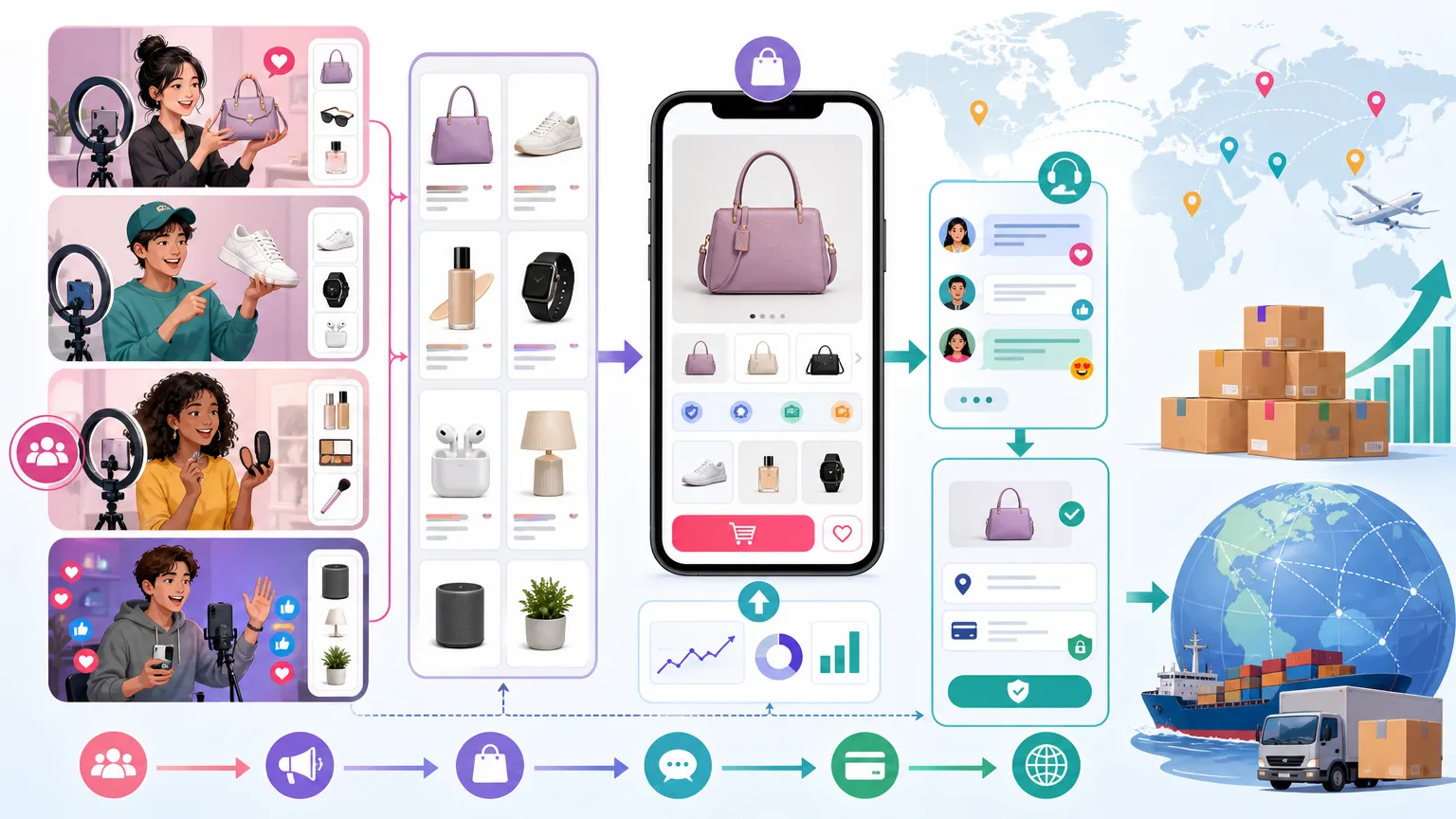
This tutorial has a clear purpose: help you build an execution chain for selling globally with TikTok Shop, from creator outreach to product page optimization and pre-sales conversion support, so you can put it into practice step by step.
Public reports mention that TikTok Shop's Southeast Asia 6.6 campaign GMV increased 106% year over year, and the platform is still expanding globally. For cross-border sellers, this points to one thing: traffic is still growing, but the real gap does not come from simply "opening a store." It comes from whether your content, product page, and inquiry conversion flow can actually catch that demand.
Modern Retail reported that some brands already treat TikTok Shop as a new growth channel for entering overseas markets. Their approach also shares a pattern: first use content and creators to build interest, then use livestreams or short videos to drive purchases, and finally rely on the product page and Q&A stage to capture the conversion.
Prerequisites
Before you start, you should at least have your store, basic assets, and an executable creator outreach list ready. Otherwise, the steps that follow will get stuck.
It is best to check these 6 items first:
- Your TikTok Shop store permissions are enabled for the target market.
- You already have 3-10 priority SKUs, with clear pricing, inventory, and logistics plans.
- For each SKU, you have prepared at least: main images, selling points, use cases, FAQ, and shipping time.
- Your team can handle basic communication in English or the target market language.
- You can track key metrics: impressions, click-through rate, add-to-cart rate, inquiry rate, and payment conversion rate.
- You have defined your creator budget range and commission rules.
If you have not run a profit calculation yet, use the Profit Calculator to go through the basic model first. The reason is simple: TikTok Shop traffic can ramp up quickly, but if you do not calculate creator commissions, ads, and return costs in advance, higher order volume may still fail to produce profit.
Expected outcome: you will get an acceptable gross margin range and know which price points are workable and which ones will lose money as soon as you push them.
Step 1: Identify products that are fit for content distribution before looking for creators
The first step in selling globally with TikTok Shop is not casting a wide net for creators. It is judging whether your SKUs have content distribution potential.
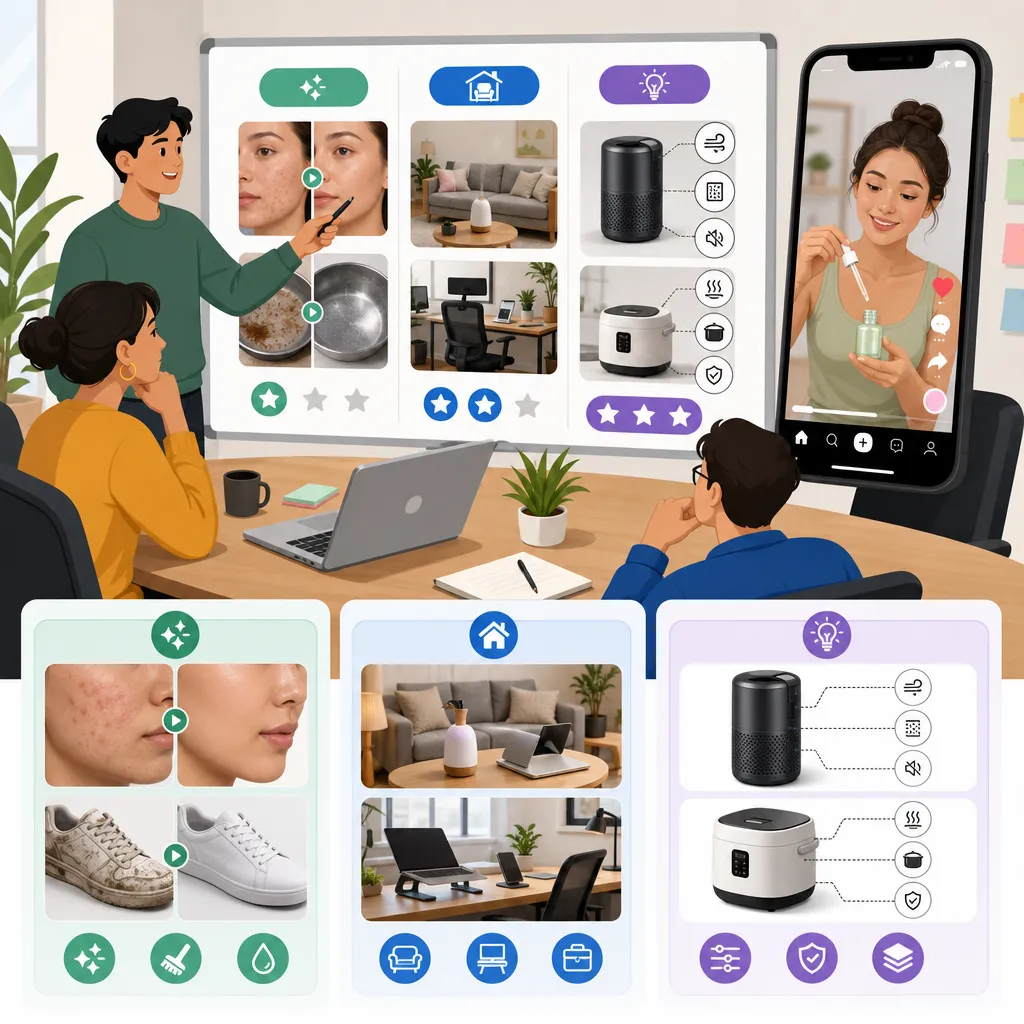
In practice, start by dividing products into three categories:
- Demo-based: easy to understand at a glance, suitable for short videos showing before-and-after changes
- Scenario-based: suitable for home, office, parenting, storage, and similar use cases
- Explanation-based: requires explanation of features, materials, and differences, so it fits livestreams or longer videos
Why sort them first? Because the efficiency of creator partnerships depends heavily on whether the product itself can be explained clearly within 3 seconds. Like the brand examples mentioned in reports, products that perform on TikTok Shop usually do not rely on low prices alone. Their content quickly explains what the item is and why it is worth buying.
Expected outcome: you will get a priority list showing which SKUs are better for short-form sales content and which are better for livestream explanation.
Step 2: Build a creator outreach list and start with small-batch testing
You should test creator partnerships before scaling them. In the first round, do not chase top-tier creators. Focus on finding people who can explain the product clearly.
Here is a practical way to do it:
- Filter creators by category, region, and audience age.
- Build an initial candidate list of 30-50 creators.
- Group them by content style: review-based, story-based, livestream-focused, and discount-driven.
- In the first round, contact only 10-15 of them to test reply rate and content fit.
If you are still manually copying profiles and sending DMs one by one, your efficiency will stay low. A steadier option is to use 达人建联 to filter creators in the browser, select them in batches, and send template DMs, which works well for fast first-round outreach.
Why do this: the most expensive part of creator partnerships is not commission. It is the cost of screening and communication. If your list is wrong, every step after that wastes time.
Expected outcome: you will get a batch of valid replies and identify partners willing to accept samples, add products to their showcase, or test via livestream.
Step 3: Give creators a media pack they can film from immediately
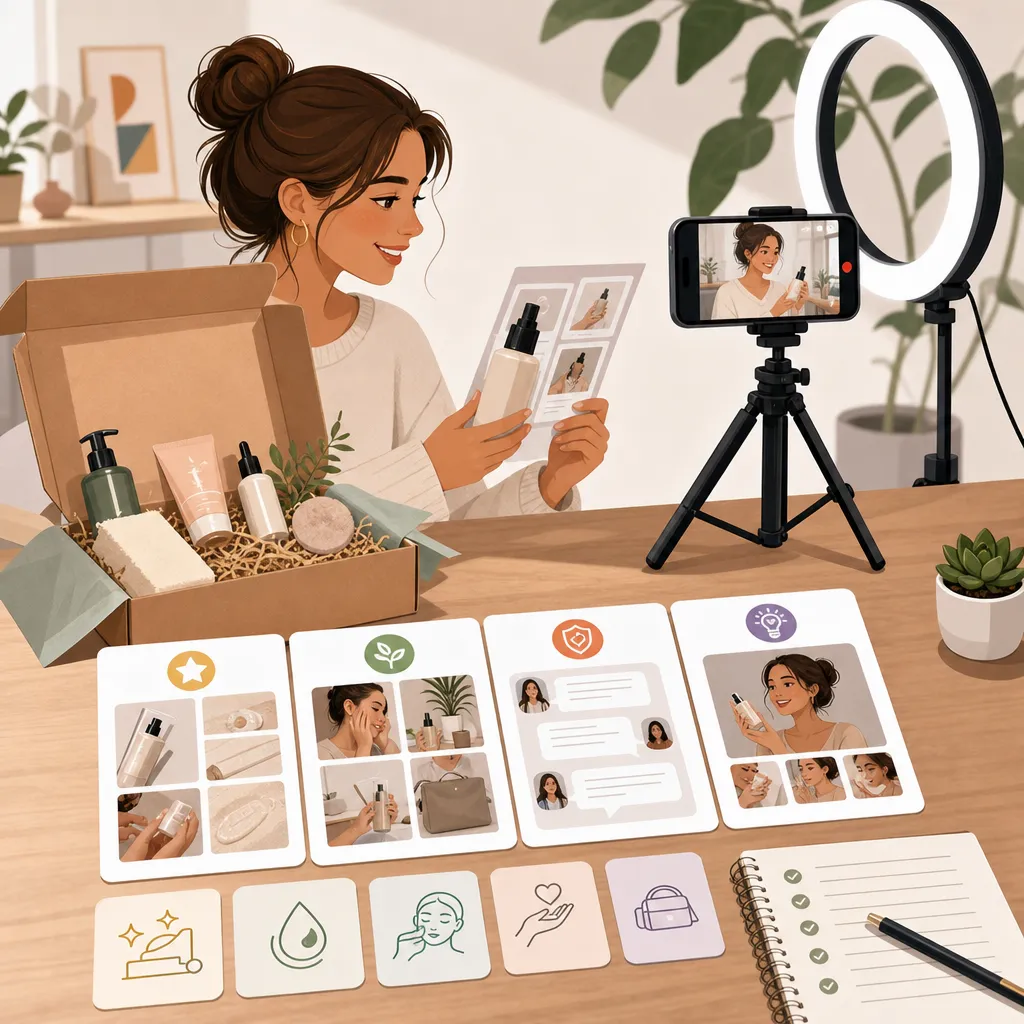
If you want to improve creator output rates, do not just "say a few more things." Compress the information into script assets they can use right away.
For each product, prepare at least:
- 3 core selling points, each limited to one sentence
- 2 typical use scenarios
- 1 set of common objections and answers
- 1 opening hook
- 1 reason to buy now, such as a limited-time discount, bundle, free gift, or visible usage result
For example, do not just give creators a line like "this is a high-quality product." A more effective structure is:
- Who it is for
- What problem it solves
- How it differs from standard options
- How long shipping takes
Expected outcome: once creators receive the sample, they can produce a first version quickly without repeatedly asking you questions.
Step 4: Optimize the TikTok Shop product page at the same time so content traffic does not drop off on the detail page
After short videos and livestreams bring users in, the conversion will break immediately if the product page is unclear.
The three most common problems here are:
- The title reads like an internal warehouse label, with incomplete keywords
- The selling points are in a messy order, so users cannot see why they should buy
- The description sounds like platform insider language instead of consumer-facing wording
The fix is straightforward. Pull out your current title, selling points, and description, then rewrite them using this order: target audience, core problem, product solution, and reason to buy. If you want to test multiple versions faster, you can use AI Listing to diagnose the current page first, then rewrite the title, selling points, and description to fit the platform style.
Why do this: creator content drives clicks, but the product page does the convincing. When the two do not match in messaging, conversion rates usually fall sharply.
Expected outcome: your product title will look more like a search query, your selling points will have a clearer structure, and users will understand the product value faster after landing on the page.
Step 5: Add pre-sales Q&A support so interested users do not get stuck at the final step
A lot of conversion loss on TikTok Shop is not a traffic problem. It happens because users ask questions and nobody replies in time.
Common questions include:
- When will it ship?
- Is it suitable for a certain group of people or a certain use case?
- Do the size, material, or compatibility meet their needs?
- Is there local return, exchange, or after-sales support?
If you rely on staff to watch chat windows manually, it is easy to miss orders once time zones differ. A better approach is to organize product knowledge, shipping timelines, and after-sales policies into a knowledge base, then use AI售前顾问 to handle frequent pre-sales inquiries first and reduce buyer hesitation.
Why do this: TikTok Shop buying decisions move fast. If a user asks a question and gets no reply for 10 minutes, they often move on to another seller.
Expected outcome: common pre-sales questions get answered in time, and product inquiries no longer depend entirely on staff being online.
Step 6: Put content, product page, and inquiry data into one review sheet

If you want repeatable growth, do not look only at GMV during review. Look at where the drop-off happens in each part of the funnel.
It is best to review at least 5 metrics every week:
- Creator outreach reply rate
- Content publishing rate
- Product click-through rate driven by content
- Product page add-to-cart or order conversion rate
- Deal-closing rate after pre-sales inquiries
You can track it with a table like this:
| Stage | Metric to watch | What to check first when performance is below expectations |
|---|---|---|
| Creator outreach | Reply rate | Creator fit, DM template |
| Content publishing | Output rate | Whether the media pack is clear enough, whether samples were sent on time |
| Content conversion | Click-through rate | Opening hook, video pacing, product card placement |
| Product page conversion | Add-to-cart rate / payment rate | Title, selling points, price, reviews |
| Pre-sales support | Inquiry-to-sale rate | Reply speed, FAQ completeness |
Expected outcome: you will know whether the problem sits in creators, content, the product page, or pre-sales support instead of blaming everything on "weak traffic."
Common mistakes and troubleshooting
When TikTok Shop global selling fails to gain traction, the most common issue is not a single-point mistake. It is a broken link somewhere in the middle of the chain.
Mistake 1: Lots of creator replies, but no orders
First check whether the product is suitable for content expression, then see whether the creator's audience matches the product's target users. If the content gets plenty of likes but few clicks, the issue is usually the video hook. If clicks are there but orders are low, the issue is usually the product page and pricing.
Expected outcome: you will be able to tell whether the issue is in the content front end or the product conversion stage.
Mistake 2: You have revised the product page many times, but conversion is still average
Start by deleting ineffective description copy and keep only the 3 most important reasons to buy. Then check whether the title covers core keywords and whether the first screen answers "what is this" and "who is it for."
Expected outcome: the page becomes more focused, and users do not need to scroll through many screens to find the key points.
Mistake 3: Inquiry volume has gone up, but the team cannot keep up
Organize frequent questions into standard answers and file them into four categories: shipping, specifications, suitability, and after-sales. If you still rely on staff to copy and paste replies one by one, it is hard to keep response speed stable.
Expected outcome: inquiries are handled faster, and missed replies and repetitive work decrease.
Summary and next steps
A TikTok Shop global selling chain that actually works comes down to four core steps: choose products suited for content distribution, improve creator outreach efficiency, turn the product page into a page that can convert, and use pre-sales Q&A to capture the final step.
If you have already completed the first round of testing, you can do two more things next:
- Break down top-performing creator content into templates and reuse them for similar SKUs
- Build separate product page versions by market to reduce differences in user understanding across regions
This is also why many brands keep benefiting from TikTok Shop's incremental growth. Platform traffic will fluctuate, but once you build a reusable conversion chain, expanding into more products and more markets becomes much easier.
CTA
Want to try the product page optimization part of this method? Start with Niceggie's AI Listing, run a diagnosis using your current title, selling points, and description, and then decide what to revise first.
FAQ
For TikTok Shop global selling, should you find creators first or optimize the product page first?
It is safer to build a solid product page foundation first and then work on creator partnerships. Content can drive clicks, but the product page determines whether users place an order.
Do TikTok Shop creator partnerships always require top-tier creators?
Not necessarily. In the first round, it is often better to test with small and mid-sized creators first. Costs are easier to control, and it is easier to verify whether the product matches the content style.
What problems does AI Listing mainly solve?
It mainly solves unclear titles, selling points, and descriptions, making the page fit the platform's display logic better and making the product value easier for users to understand.
At what stage should AI Presales Agent be used?
It fits best when inquiries start increasing and manual replies cannot keep up. It is especially useful for cross-time-zone operations because it can handle common pre-sales questions first.
Which metric matters most when reviewing TikTok Shop global selling performance?
Do not look only at GMV. It is more useful to review the funnel by reply rate, click-through rate, product page conversion rate, and inquiry-to-sale rate so you can see exactly where the problem is.
Sources
Modern Retail