Missing Messages Due to Time Zones and After-Hours Inquiries? Use AI Customer Service to Handle Common Questions First

You may be dealing with a familiar situation: ads bring in traffic, and customers ask questions such as “How long does shipping take?”, “Can I change my address?”, and “Do you offer discounts?” But before customer service has time to respond, they have already left the page or even turned to a competitor. When time differences across countries combine with after-hours inquiries, missing one message may mean losing one more sales opportunity.
Why Can One Missed Message Affect a Sale?

Slow customer service responses first weaken purchase intent, followed by losses in team time and store ratings. Cross-border customers often need to confirm shipping, sizing, return and exchange policies, and payment methods. If their questions are not handled promptly, they may struggle to complete payment.
Common effects include:
- Lost conversions: Customers compare other stores while waiting, and their initial interest in buying drops quickly.
- Higher labor costs: Customer service repeatedly answers the same questions but struggles to cover early mornings, weekends, and promotional peaks.
- Greater service risks: Messages are scattered across different channels, making duplicate replies, missed messages, and inconsistent answers more likely.
If a store receives dozens of inquiries a day, a human team may still manage them. When promotions, social media campaigns, or new product launches bring a surge of visitors, customer service can quickly become overwhelmed by repetitive questions.
Where Does Manual Coverage Usually Fall Short?
The problem with human customer service is not a lack of effort, but the inability to cover every hour, channel, and volume of inquiries at once. Shifts can extend service hours, but they increase scheduling and training costs. Copy-and-paste templates can improve speed, but different languages and order situations still require human judgment.
Common approaches each have limitations:
- Set up a fixed FAQ: It can handle standard questions, but cannot ask follow-up questions or respond based on context.
- Arrange overnight shifts: This can reduce waiting, but it is difficult to sustain the labor costs during long periods of peak demand.
- Use standardized templates: Responses are faster, but the content may not fit the customer’s question closely enough, which can weaken trust.
The real goal is not simply to have someone respond. It is to give customers clear, consistent answers at the right time while directing complex issues to human agents.
How Can AI Customer Service Handle Cross-Border Inquiries?
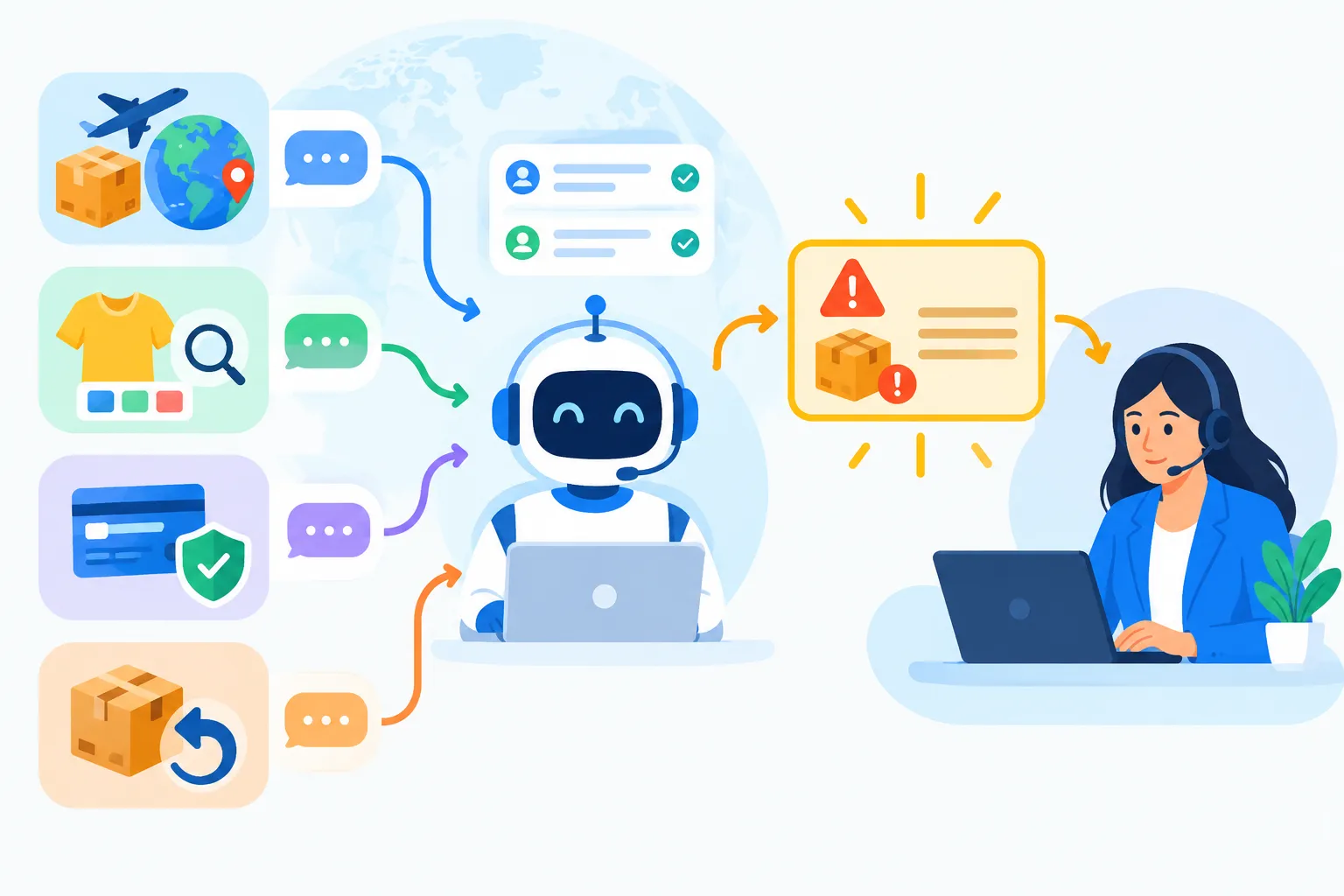
AI customer service can handle frequent, straightforward questions first, provide automated replies around the clock, and transfer issues requiring judgment to human agents. For example, when customers ask about shipping times, delivery regions, return and exchange conditions, or product specifications, the system can respond using configured information. When order issues or refund disputes arise, it can transfer the conversation to a human agent for follow-up.
The focus of Niceggie AI Customer Service is not to replace the entire customer service team. It separates repetitive inquiries from the human queue. You can first organize your store policies, product information, and frequently asked questions, then let the system respond based on that content, reducing repeated work on basic questions.
With AI Customer Service, stores can build a more consistent automated response process, cover inquiries outside working hours, and define clearer boundaries for human agents.
What Practical Improvements Can Automated Replies Bring?
The value of consistent responses lies in reducing losses caused by waiting and allowing customer service to focus on conversations that require more judgment. It typically improves store operations in three ways:
- Cover inquiries 24/7: Customers do not have to wait until the next business day for basic information, which is especially useful when operating across time zones.
- Shorten first-response time: The system automatically answers configured questions, reducing the chance that customers leave because they are waiting.
- Reduce repetitive work: Customer service can focus on order issues, after-sales negotiations, and conversations with high-value customers instead of repeatedly answering the same set of questions.
For example, if a customer asks late at night whether delivery is available in a certain region, AI customer service can first explain the delivery rules. If the customer then asks how long delivery will take, the system can continue by providing the relevant estimated time. If the customer requests an address change, a refund, or special order handling, a human agent can take over. This creates a more complete process than simply setting a fixed welcome message.
Organize These Three Types of Information Before Launching

The effectiveness of automated replies depends on the accuracy of the knowledge content, so it is best to start with frequent, low-risk questions. You do not need to cover every situation at the beginning. Start by organizing these three types of information:
- Shipping and delivery: Handling time, delivery regions, estimated delivery times, shipping fees, and tracking methods.
- Products and ordering: Specifications, inventory, usage instructions, payment methods, and discount rules.
- After-sales service and boundaries: Return and exchange conditions, refund procedures, and conditions for transferring a conversation to a human agent.
After launch, review unresolved questions once a week and add topics that customers ask about repeatedly. For information that changes frequently, such as prices, inventory, and order status, specify when it was last updated and keep a human verification option available to prevent automated replies from using outdated content.
Handle Frequent Questions First, Then Expand Coverage
The safest approach is to test with 10 frequent questions instead of handing every customer service scenario to AI at once. Record the most frequent questions from one week and check whether automated replies are accurate, whether customers need to ask follow-up questions, and which situations must be transferred to a human agent.
Once responses to basic questions perform consistently, gradually expand to multilingual inquiries, promotional campaign explanations, and after-sales triage. This reduces launch risks and helps you determine how much staff time automated replies save and how many missed messages they prevent.
Want to Handle Frequent Inquiries First?
You can learn more about Niceggie AI Customer Service, starting with common questions about shipping, products, and after-sales service, then gradually building an automated response process suited to your store.
FAQ
What types of cross-border store questions is AI customer service suitable for?
AI customer service is suitable for frequent questions about shipping times, delivery regions, product specifications, payment methods, and return and exchange policies. Issues that require judgment, such as order problems and refund disputes, should still be handled by human agents.
Can automated replies completely replace human customer service?
No. A more suitable approach is to let AI customer service handle repetitive, straightforward questions and transfer complex orders and special requests to human agents, reducing the time the team spends on basic inquiries.
Why do cross-border stores need 24/7 automated replies?
Cross-border customers are located in different countries and time zones, so inquiries may arrive after the store team has finished work. 24/7 automated replies reduce long waiting times and help prevent missed messages at night and on weekends.
What should I prepare before using AI customer service?
Start by organizing information about shipping and delivery, products and ordering, and after-sales boundaries. Also confirm which topics require human verification. Cover frequent, low-risk questions first, then gradually add knowledge based on unresolved inquiries.
How can I tell whether automated replies are effective?
You can monitor whether the first response is timely, whether customers ask repeated questions, which issues are still frequently transferred to human agents, and whether repetitive work for customer service has decreased. Start by testing the frequent questions from one week, then decide whether to expand coverage.