Amazon Commits $25 Billion to Expand AI Facilities: How Cross-Border Sellers Can Use Niceggie’s AI Customer Service and Presales Bot to Improve Efficiency Early

This Amazon Spending Will Affect Sellers’ Daily Operations Before It Affects the Stock Price
Amazon’s $25 billion bond issuance, with funds directed into AI infrastructure, matters to Amazon sellers because the platform will keep raising its expectations for response speed, content quality, and service efficiency. Public reports mention that Amazon issued $25 billion in bonds to expand AI infrastructure; at the same time, its capital expenditure for 2026 is about $200 billion【To be added: source】. This is not news meant only for investors. It will quickly show up in search rankings, customer service experience, ad efficiency, and conversion paths.
If the platform keeps investing heavily in AI, the most dangerous mistake sellers can make is to treat AI as just “a faster way to write copy.” The real changes usually happen in smaller touchpoints, such as whether buyer questions get answered in seconds, whether presales conversations can shorten hesitation, and whether a listing matches the platform’s preferred style of expression.
The Counterintuitive Take: Customer Service and Presales Will Pull Ahead First
Many people assume that after Amazon upgrades its AI, ad buying and enterprise-only tools will get competitive first. I agree more with another view: the earliest gap will show up in customer response and presales Q&A. The reason is simple. In the buyer decision path, the easiest part to overlook, and also the easiest part for AI to improve, is the stretch from “question, answer, remove doubt, place order.”
In the past, cross-border teams often treated customer service as a cost center and presales Q&A as low-priority work. But once the platform’s overall AI capability rises, consumer expectations for instant, accurate, and consistent service will rise with it. If you still rely on slow manual replies or force every case into a template, the experience gap will widen fast.
First Change: Response Speed Will Shift from a Bonus to a Requirement
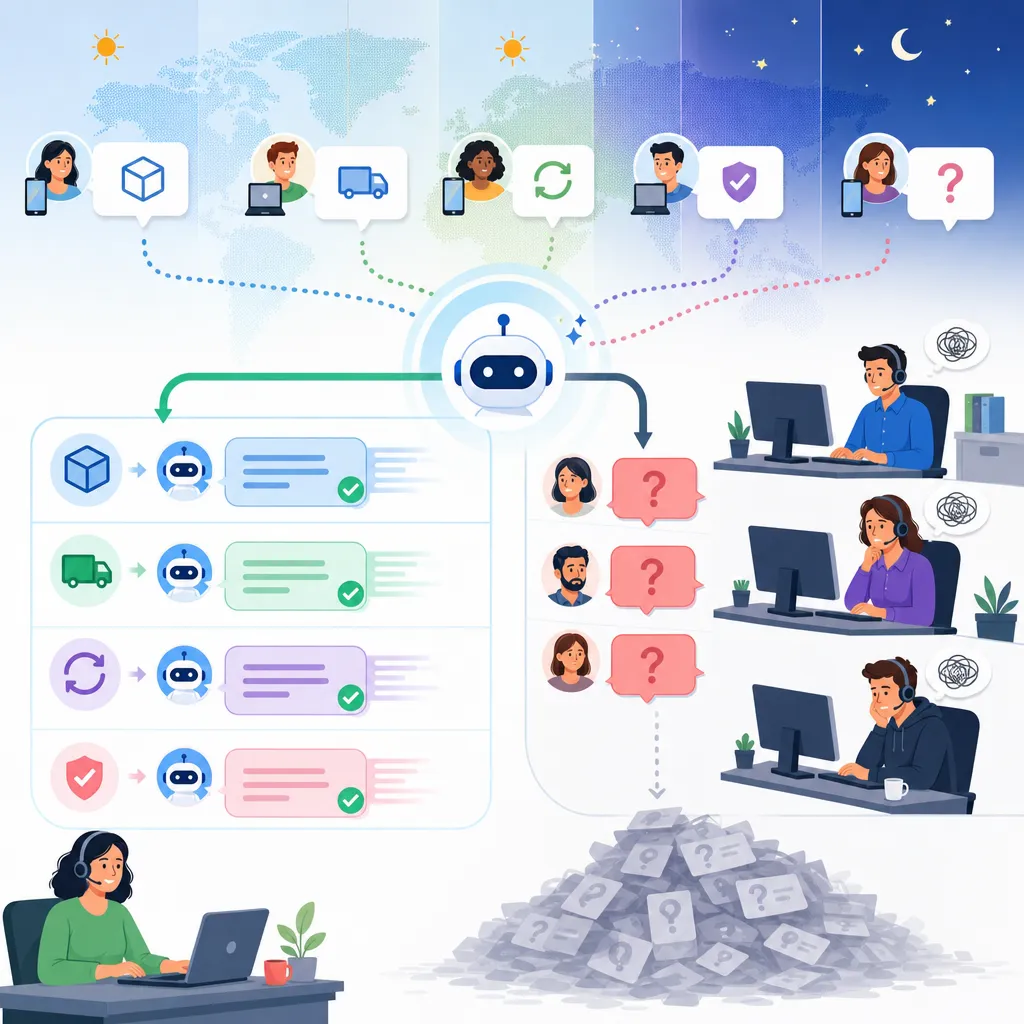
As the platform infrastructure becomes more AI-driven, buyers will assume you should reply faster. This is not just a psychological expectation. Many cross-border scenarios are already well suited for automation: shipping checks, size/spec confirmation, warranty policies, delivery timing, and refund status. These questions repeat often and follow relatively fixed patterns, which makes them ideal for AI to handle first.
For sellers, the issue is not whether to adopt an AI customer service assistant. The issue is when to free human staff from repetitive replies. This matters even more for multi-store, multi-time-zone operations, where nighttime inquiries and weekend messages pile up easily. Once response time slips, both conversion and reviews are affected.
Niceggie’s value here is straightforward. Use AI Customer Service Assistant to handle common buyer questions, shipment tracking, and after-sales communication. It works well for getting standardized replies running first, then handing more complex cases to people. You do not need to wait until your team is large to do this. Smaller teams should usually fix this earlier.
This trend is not limited to Amazon. Major platforms are all raising their service-efficiency expectations. If multi-platform sellers still use the same low-frequency manual workflow for Amazon, Shopify, TikTok Shop, and eBay, operational friction will only keep growing【To be added: source】.
Second Change: Presales Q&A Will Directly Affect Conversion, Not Just “Service Attitude”
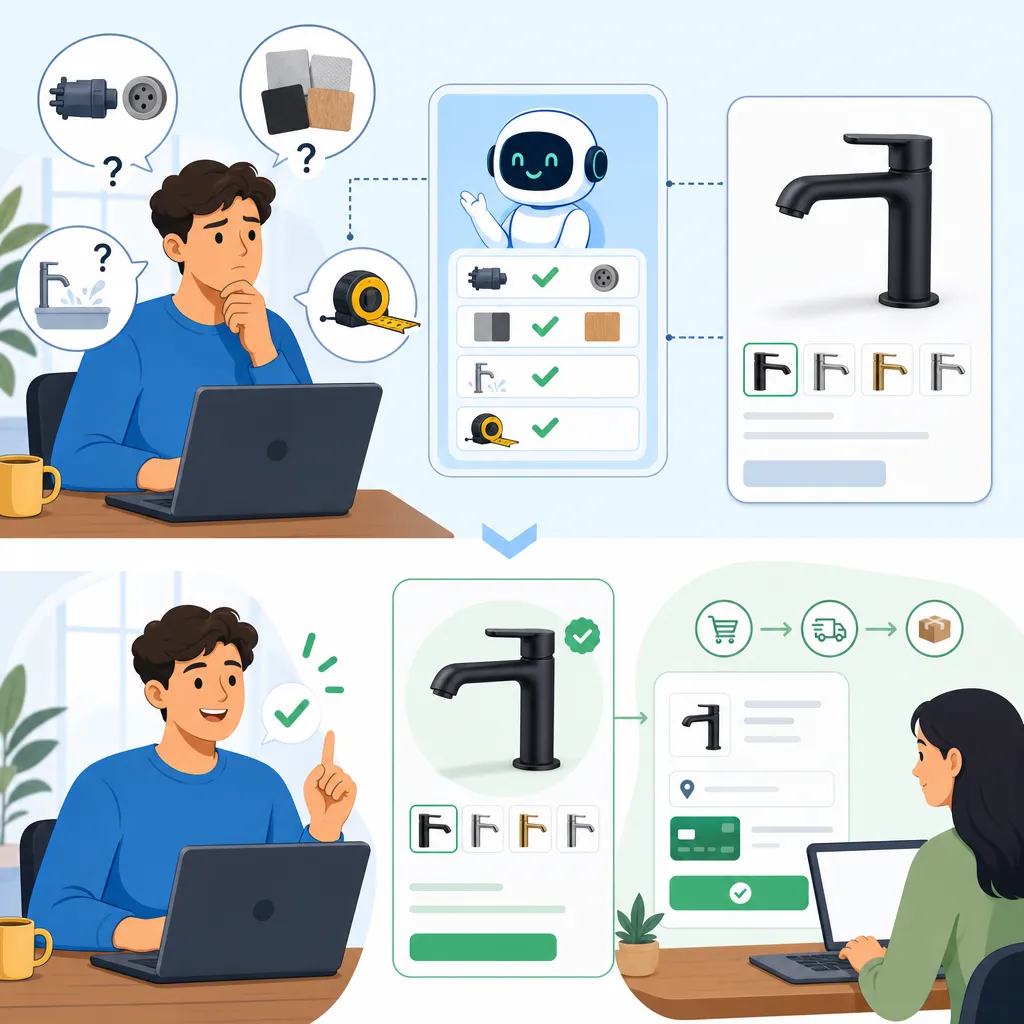
When buyers hesitate before placing an order, the issue is often not price but incomplete information. Whether the product fits, how a feature works, what material it uses, and whether it is compatible with an older model—if these questions are answered poorly, users usually do not keep asking. They leave.
That is why an “AI Presales Advisor” is becoming a more important setup. It is not just an automated reply saying “please check the product page.” It needs to answer specific questions from your knowledge base and turn product information into language buyers can understand and act on right away.
For cross-border sellers, this step is especially important. Even if your English product page is complete, that does not mean buyers are willing to read all of it. Many lost orders do not happen because the product is weak. They happen because no one catches the buyer at the final moment before purchase.
Niceggie’s AI Presales Advisor fits this stage well: it answers product questions from your knowledge base, catches high-frequency inquiries early, and reduces drop-off caused by repeated buyer confirmation. The stronger the platform’s AI becomes, the more it will magnify the gap between sellers who can answer quickly and accurately and those who cannot.
Third Change: Listings Will Not Disappear, but They Will Move from “The Only Focus” to “Infrastructure”

After Amazon expands its AI facilities, listing optimization will still matter, but it will no longer be the only growth lever. Many teams used to put most of their effort into titles, bullet points, and hero images. That is still reasonable. The problem is that when competitors are all doing the same thing, the listing itself starts to look more like an entry ticket than a moat.
What will keep creating separation is the combined effect of content quality, service speed, and presales explanation. In other words, the page brings people in, presales removes hesitation, and customer service protects the experience.
So yes, you should keep improving how your pages communicate. This matters even more in multi-platform selling, because Amazon, Walmart, Best Buy, eBay, and Shopify do not prioritize the same writing style or information structure. Using AI Listing to check six dimensions and rewrite by platform style is steadier than relying only on manual edits. Still, in terms of investment order, many sellers will need to shift budget and attention from “page-only optimization” to doing page, Q&A, and service together.
The Impact Is Different for Different Roles
The same wave of AI upgrades does not hit practitioners, businesses, and consumers in the same way. If you work in frontline operations, what you feel first is usually not technical jargon but workflow change.
For frontline operations and customer service teams
You will need to manage exceptions more than repeat answers. High-frequency questions with clear rules will increasingly be better handled by AI first. Human work will shift toward escalated disputes, judgment in unusual scenarios, knowledge base maintenance, and correction of response strategy.
That means roles will not simply disappear, but the skill model will change. In the future, the more valuable ability will not be typing fast. It will be organizing product knowledge clearly, categorizing edge cases, and training AI replies to be more reliable.
For sellers and brands
You will face efficiency gaps being amplified earlier. Amazon’s investment in AI infrastructure will not automatically make every seller stronger. More likely, it will raise the market average first. Once that average rises, stores with slow replies, messy information, and weak presales continuity will look worse.
This is especially true for small and mid-sized sellers. A common mistake is to chase complicated ad execution first and patch the service system later. In reality, many lost orders die in the gap between inquiry response and unclear information delivery. Connecting customer service, presales, and listings usually creates a steadier outcome than pouring money into ads alone.
For consumers
Consumers will get used to instant answers and low-friction buying faster. Once platforms and top merchants make this experience normal, users will stop tolerating inefficient interactions like “wait 24 hours for an email reply” or “please check the page yourself.”
That also explains why service experience feeds back into conversion and repeat purchase. Consumers may not know what system you use, but they will clearly feel whether the store is easy to communicate with, whether the information is clear, and whether problems get solved in time.
Why This Shift Is Especially Urgent for Cross-Border Sellers
Cross-border sellers are more likely than local merchants to be pulled apart by AI efficiency gaps. The reasons are not complicated: larger time-zone gaps, more complex language paths, more platform rules, and higher SKU explanation costs. If any single step responds half a beat too slowly, the loss gets amplified.
On top of that, the creator traffic mix you mentioned is also changing. Some creators are moving from the traditional RPM model to TikTok Shop affiliate selling, which makes “presales Q&A before purchase” and “the ability to catch traffic after off-platform acquisition” even more important【To be added: source】. When traffic arrives and you cannot convert it, that feels worse than having no traffic at all.
So cross-border teams should now treat AI as operating infrastructure, not as an optional add-on. Whoever adopts it first and smooths out the workflow first will see the gap show up earlier in customer service tickets, presales conversion, manual workload, and repeat-purchase experience.
Niceggie’s View: Start with the Three Easiest Things to Measure
If you want to judge whether this wave of Amazon AI investment has practical value for your business, look at three things first: first response time in customer service, presales conversion, and content consistency. These three metrics are the easiest to be affected by the spillover from platform AI upgrades, and they are also the easiest places to see short-term change.
Our view is clear: sellers do not need to chase full-funnel automation on day one. Starting with automatic replies for high-frequency inquiries, knowledge-base-driven presales Q&A, and platform-adapted listing diagnostics is a better fit for how most teams are staffed and resourced. At the same time, tracking platform policy changes, logistics shifts, and creator ecosystem trends will usually be more effective than optimizing in isolation.
The Better Question Now Is Not “Should You Use AI?”
The more practical question is this: now that the platform is spending heavily on AI expansion, has your store already fixed the easiest customer touchpoints to improve? The signal from Amazon’s $25 billion bond issuance and roughly $200 billion in capital expenditure is already clear. Platform-level AI investment will not stop at the concept stage.
What separates sellers next may not be who knows more terminology first, but who replies faster, answers more accurately, and keeps pages and service more connected. The thing most worth reviewing now may not be your next ad budget, but whether your system can reliably catch buyer questions once they come in.
Want to Keep Up with Seller Tactics After Platform AI Upgrades?
If you want to start with the easiest parts to put into practice, you can check out Niceggie’s TikTok Creator Outreach and other seller tool ideas, then review your own customer service, presales, and content workflow. Getting one short section running smoothly first is usually more practical than trying to roll out everything at once.
FAQ
If Amazon expands its AI facilities, will ordinary Amazon sellers feel the impact right away?
Yes. The impact usually does not appear all at once in a single day. It gradually shows up as the platform’s average efficiency rises, making your response speed, presales Q&A, and content quality easier to compare.
In this wave of change, should sellers improve customer service first or listings first?
If your inquiry volume is already substantial, improving customer service and presales first is usually more cost-effective. Listings still matter, but they will look more like a basic requirement going forward. The real gap comes from page, Q&A, and service working together.
What kinds of issues are best handled by an AI Customer Service Assistant?
It is best for high-frequency, standardized issues, such as shipping checks, after-sales progress, specification confirmation, and common policy explanations. Complex disputes and exceptional cases should still be left to human judgment.
What is the difference between an AI Presales Advisor and a normal auto-reply?
The difference is answer quality. A normal auto-reply usually just sends people back to the product page. An AI Presales Advisor focuses more on answering specific product questions from a knowledge base, with the goal of reducing hesitation and helping the order happen.
Do small and mid-sized cross-border teams also need to start using AI this early?
Yes, and in many cases they need it even more. With fewer staff, longer time-zone gaps, and more platforms to manage, repeated inquiries can drag down efficiency quickly. Smaller teams are often better candidates to automate high-frequency workflows first.
Sources
Fool