TikTok Shop Shipping Is Slower Than Amazon: How Can Cross-Border Sellers Use AI Support to Protect Reviews and Conversions?
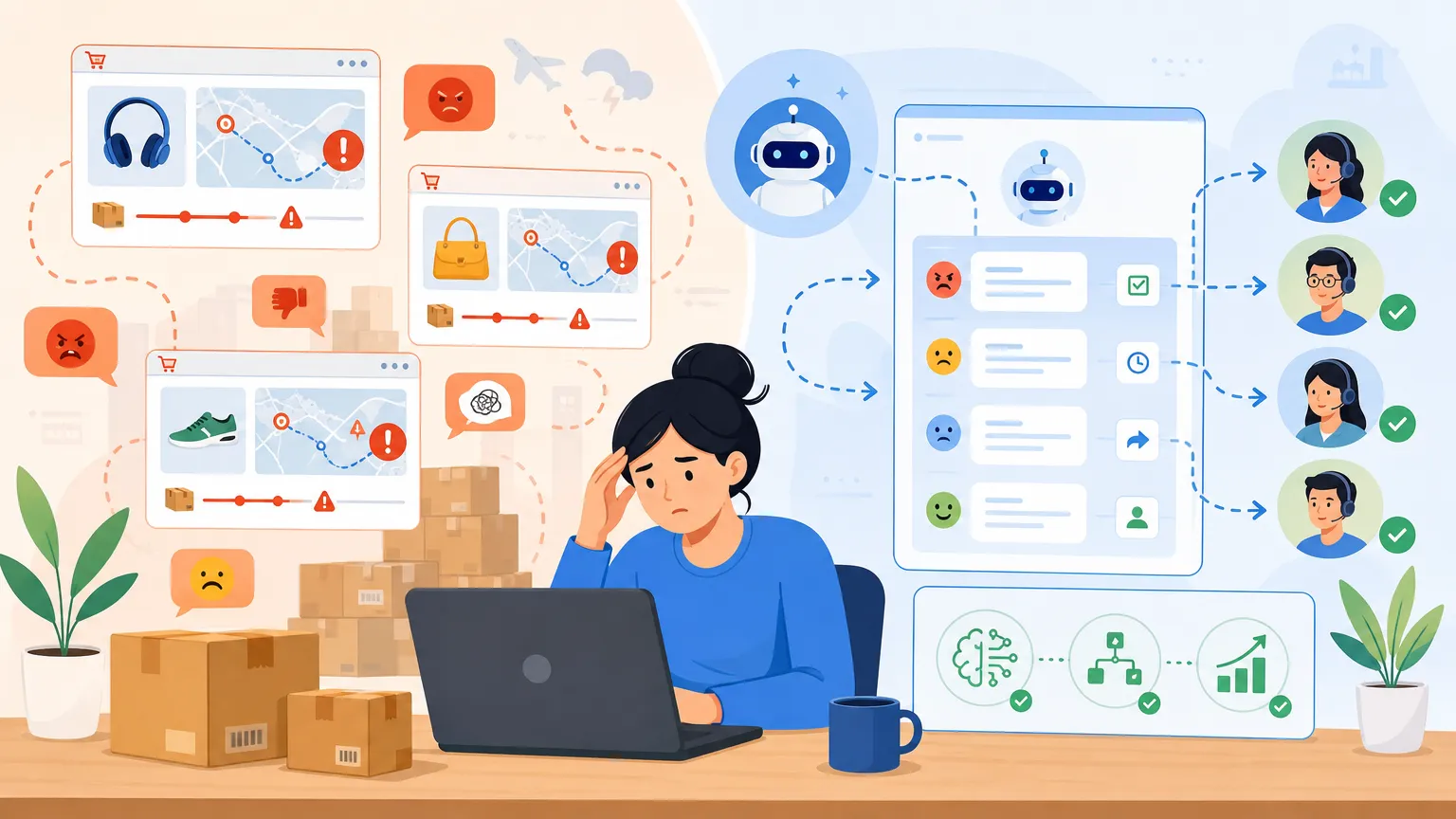
You've probably seen this happen: a buyer places an order, then after two or three days with no tracking update, messages start popping up in the chat window. First it's “When will it ship?”, then “Why hasn't it arrived yet?”, and after that comes “I want a refund” or the warning signs of a one-star review. For cross-border sellers on TikTok Shop, the problem often isn't just the logistics itself. The bigger issue is that once fulfillment starts to fluctuate, you fail to catch the buyer's frustration in time.
When buyers shop across Amazon, Walmart, and TikTok Shop at the same time, they don't assume that each platform should have a different standard. They assume you should deliver roughly the same experience everywhere. Public research from Radial notes that TikTok Shop has a higher delivery delay rate than Amazon and Walmart. That means you're not dealing with occasional complaints. You're dealing with a customer service and reputation problem that can flare up in concentrated waves.
Delays Are More Than Slow Shipping: They Also Drag Down Reviews and Repeat Purchases
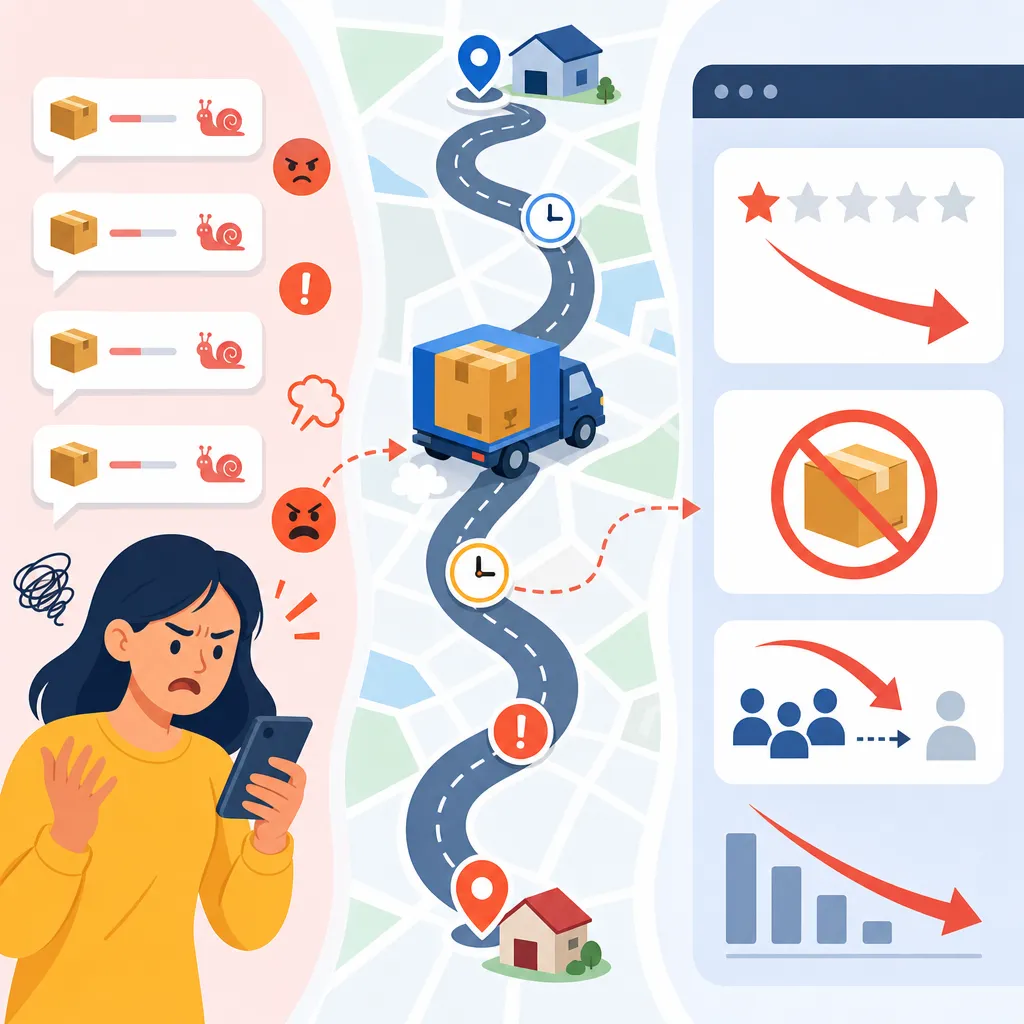
When shipping speed falls behind, the first damage usually doesn't show up in logistics metrics. It shows up in support efficiency, store ratings, and conversion.
Buyers don't separate “warehouse backlog,” “last-mile congestion,” or “platform volatility” into neat categories. They only see one outcome: the package didn't arrive when expected. As a result, support teams get flooded with a few repeated questions:
- Where is the order right now
- Why hasn't the tracking updated yet
- Can you expedite it or offer compensation
- If I keep waiting, how long will it take exactly
- Is it better to refund now or resend the item
These questions look simple, but the real problem is that they arrive in batches. When one support agent is watching multiple channels at once, even a delay of half an hour can noticeably worsen the buyer's experience. On a platform like TikTok Shop, where impulse purchases make up a large share of orders, hesitation during the wait can quickly turn into cancellations, refused deliveries, or a public negative review. Future conversion takes a hit too.
What Drains Your Time Isn't Replying, It's Repeating the Same Explanation
For many sellers, support pressure doesn't come from complex questions. It comes from having to say the same thing dozens or hundreds of times.
Once shipping disruptions appear, team time gets swallowed by three tasks. The first is order lookup: you have to jump back and forth between the logistics system, the store backend, and chat tools. The second is reassurance: you need to adjust your wording based on each order's status, without sounding too absolute or too dismissive. The third is after-sales triage: you have to decide quickly which orders should keep waiting, which should be refunded, and which should be resent.
That leads to three direct outcomes:
- Higher labor costs: during peak periods, you often have to add temporary staff, but there isn't enough time to train them.
- Unstable response quality: different agents may give different explanations for the same type of issue.
- Indirect conversion losses: presales inquiries and after-sales order chasing pile up together, while new buyers with real purchase intent end up waiting.
If your store also operates on Amazon, Shopify, TikTok Shop, or eBay, this chain reaction becomes even more obvious. Buyers compare the experience across every channel. They won't lower their expectations just because your TikTok Shop shipments move more slowly.
Why Common Fixes Still Can't Stop Negative Reviews
Relying on manual copy-paste replies or last-minute FAQs usually reduces pressure, but it rarely stabilizes the buyer experience.
Many teams start with quick replies. That helps, but it only solves typing speed. It doesn't solve two core problems: first, order status changes quickly, so fixed scripts can become inaccurate fast; second, buyers have different emotional states, and scripted replies can make frustration worse.
Some sellers outsource customer service, only to become even more passive. An outsourced team may understand the basic process, but not your product details, compensation rules, or the boundaries of platform handling. Once a buyer asks, “Why is this order different from my last one?” or “Can I still keep waiting for this item?”, response quality drops.
The root issue is clear: you don't need more manpower. You need a system that can respond consistently, continuously, and according to rules.
During Fulfillment Disruptions, Customer Service Automation Should Come First
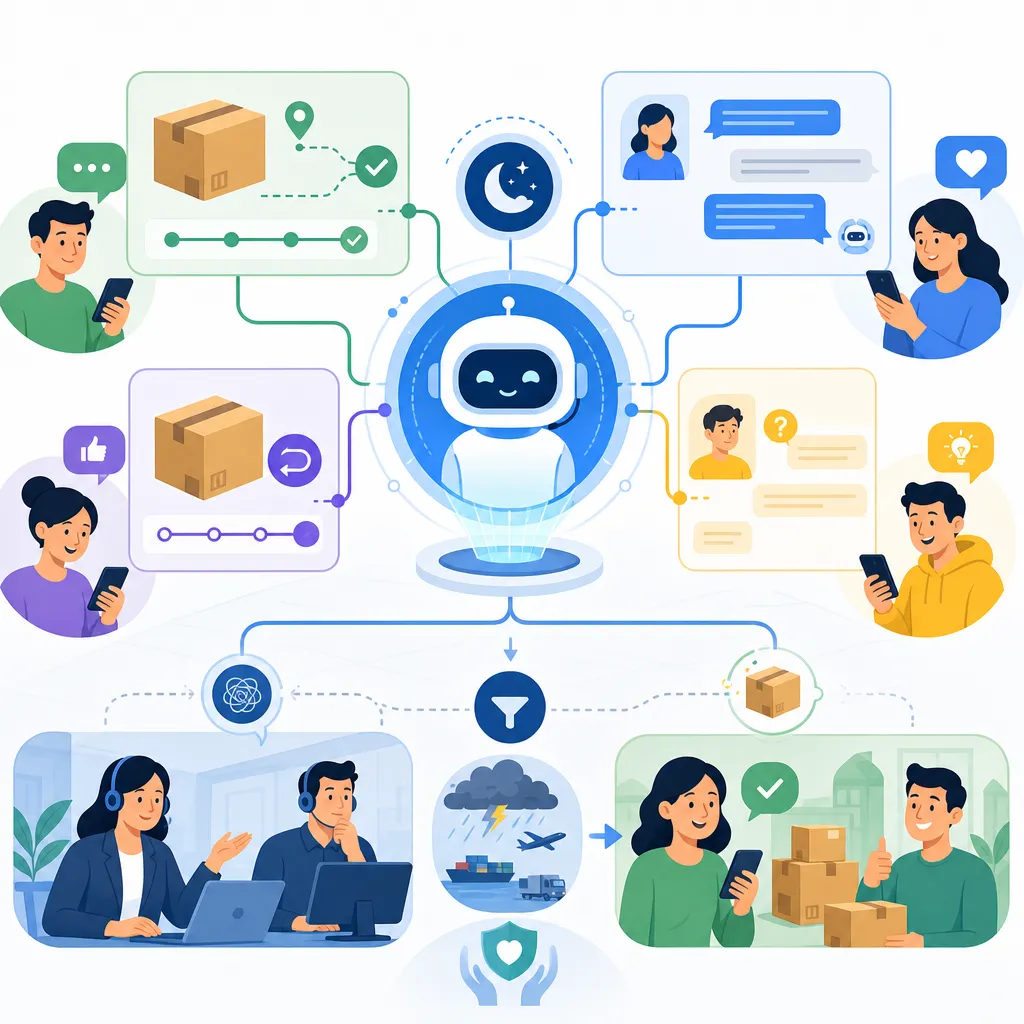
When shipping speed can't improve quickly in the short term, it's often more practical to first stabilize explanations, tracking updates, and after-sales communication.
This is exactly the kind of situation where AI support works best. For example, with niceggie's AI Customer Service, you can put common buyer questions, logistics tracking explanations, and after-sales rules into one unified workflow and handle high-frequency inquiries 24/7. From the buyer's perspective, what matters most isn't whether you replied personally. It's whether you can give a clear, credible, and consistent answer the moment they feel anxious.
If your presales inquiries also get crowded out by after-sales messages, you can hand product Q&A over to AI Presales Agent. That way, your support team doesn't have to keep switching between “Where is my package?” and “Is this specification right for me?”, and buyers are more likely to complete their order smoothly outside the waiting period.
The Real Value Is Stopping Buyer Emotions Before They Escalate
The value of AI support isn't prettier wording. It's earlier and more consistent problem handling.
In shipping delay scenarios, you need three capabilities most:
- Fast responses: when a buyer sends a tracking question, you respond immediately so the conversation doesn't sit there unanswered.
- Consistent messaging: similar orders get similar explanations, which avoids “the last agent told me one thing, and this one is saying something else.”
- Automatic triage: routine tracking requests, exception cases, and refund cases get separated, so human agents only handle the situations that actually require judgment.
That directly improves two metrics. First, the trigger point for negative reviews moves later, because many buyers are willing to wait if they aren't left waiting in uncertainty. Second, human support can spend time on high-value conversations, such as complex after-sales issues, compensation negotiations, and repeat purchases.
Don't Wait for Negative Reviews: Screen High-Risk Orders First
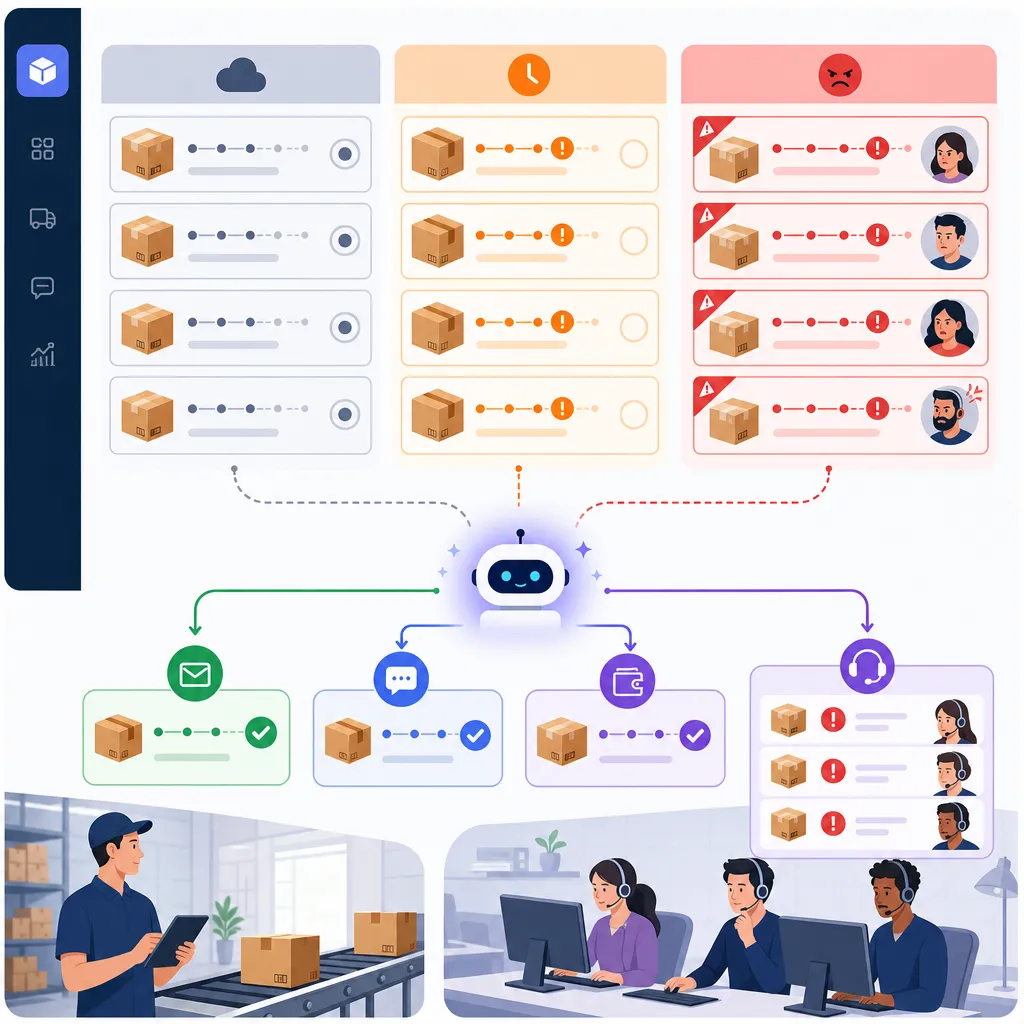
When delayed orders pile up, predicting which ones are most likely to trigger complaints is cheaper than trying to fix everything afterward.
You can split your support strategy by risk level:
- Shipped orders with no new tracking updates: prioritize sending a status explanation and an estimated observation window.
- Orders that exceed the usual delivery cycle: proactively present the boundaries between refund, reshipment, or continued waiting.
- Buyers who repeatedly follow up or whose emotions escalate: transfer them to a human agent automatically so template replies don't make things worse.
If you're still testing new products, your shipping costs and profit margins are already thin, so refunds caused by fulfillment volatility hurt even more. Before launch, you can use the Profit Calculator for a rough estimate of how much pressure your margins can handle. At minimum, you'll know whether you can absorb the losses from compensation, reshipment, or refunds.
Multi-Channel Experience Is Already Being Measured by the Same Standard
Buyers don't judge platforms separately, and you can't manage support standards separately either.
One key point from Radial is that consumer expectations across shopping channels are becoming more similar. Put simply, buyers get used to a more stable delivery experience on Amazon, then carry over similar timing judgments and service expectations when they shop on TikTok Shop. If you still treat TikTok Shop as “just a content channel, so buyers will be more tolerant,” you're likely to misread the situation.
For cross-border sellers, this creates a practical shift: when your fulfillment capability can't catch up with top platforms in the short term, customer service becomes the area you can control most actively. The sellers who explain the situation faster, offer options earlier, and avoid contradictory replies have a better chance of containing the losses caused by delays.
Want to Stabilize Shipping Tracking Responses First?
If repeated order chases, refund requests, and negative review warnings are slowing your team down, take a look at how niceggie's AI Customer Service Assistant handles high-frequency logistics tracking and after-sales questions, so you can take the heaviest part of that support load off your team first.
FAQ
If TikTok Shop shipping is slow, should you fix logistics or customer service first?
If your logistics capability can't change in the short term, fixing customer service first is more practical. What buyers notice first is “no one is explaining this” and “no one is handling this,” not the details of warehouse queues.
What kinds of delay-related issues are suitable for AI support?
It works best for high-frequency, repetitive questions with clear rules, such as logistics tracking, shipping explanations, waiting guidance, and basic after-sales triage. For complex compensation cases and emotionally escalated conversations, you should still transfer them to a human agent.
Why does the same delay trigger negative reviews more easily on TikTok Shop?
Because many buyers compare the experience directly with Amazon and Walmart. The platforms are different, but their expectations for response speed, information transparency, and consistency of handling are very similar.
Can quick replies solve most order-chasing questions on their own?
They can ease part of the pressure, but they aren't enough. Quick replies improve typing speed. They don't automatically judge order status, and they can't easily keep different agents aligned during peak periods.
Why do presales inquiries also get affected during fulfillment disruptions?
Because after-sales order chasing takes up support time, and new buyers don't get timely answers to product questions. The result is that old orders are becoming more heated while new orders are slipping away too.
Sources
Radial