US Retail Growth Rebounds to 4.4%: How Should Cross-Border Sellers Decide Whether to Add Inventory and Expand Channels in 2026?
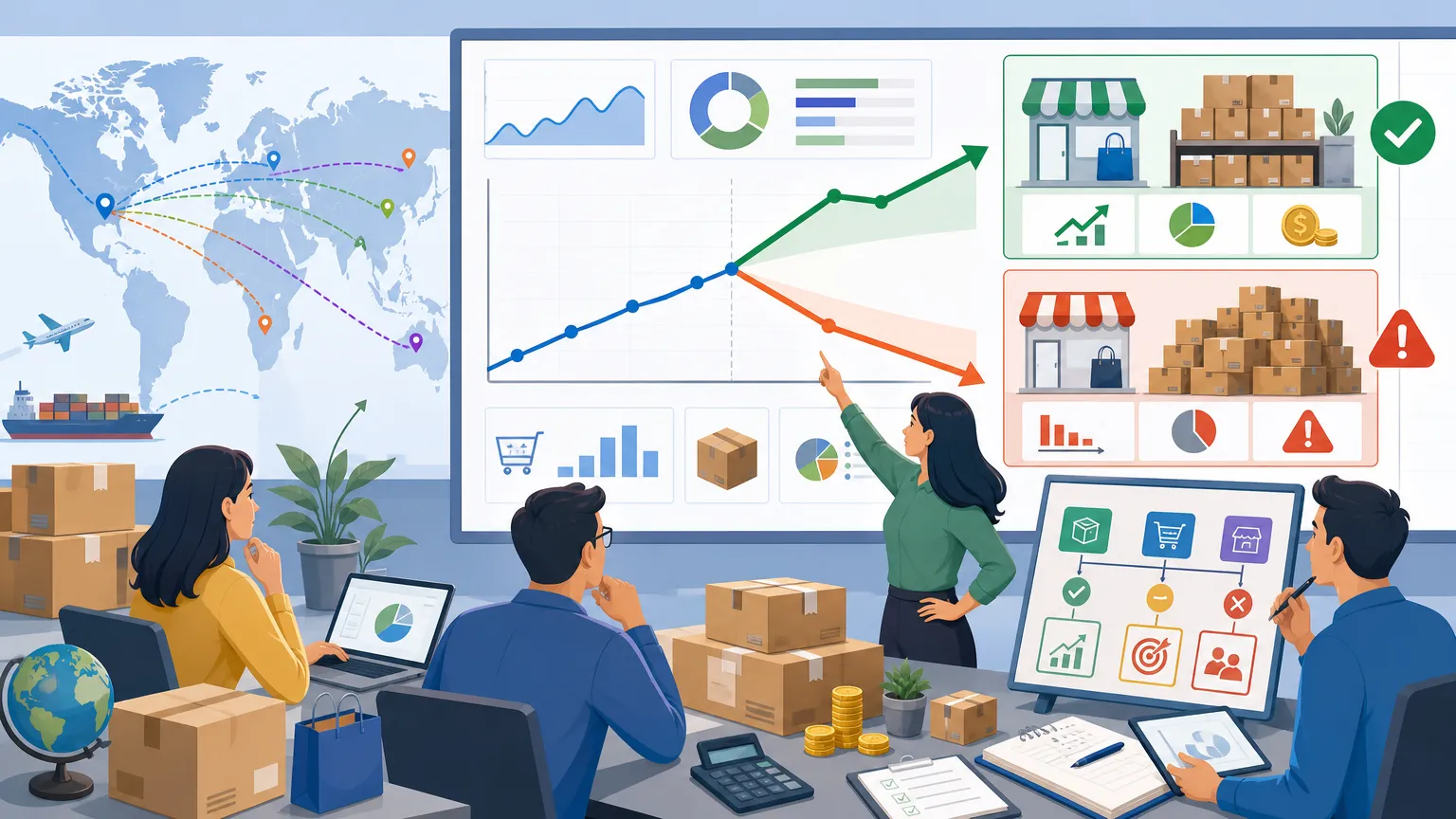
Coresight’s latest view of the US retail industry gives cross-border sellers a signal that looks optimistic on the surface but is actually harder to act on: US retail growth is projected to reach 4.4% in 2026, one of the higher levels since 2022; at the same time, the US retail market is expected to reach $6 trillion by 2029.
But what really affects seller decisions is not the word “growth.” It is the fact that growth will not be distributed evenly. The K-shaped divergence mentioned by Coresight means some price bands, categories, and channels will capture the upside, while others will remain under pressure. For cross-border ecommerce, the most dangerous move in 2026 is not being conservative. It is seeing the total market get bigger and then adding inventory, new storefronts, and ad spend all at once.
4.4% Is Not a Signal of Broad-Based Growth, but a Signal to Filter
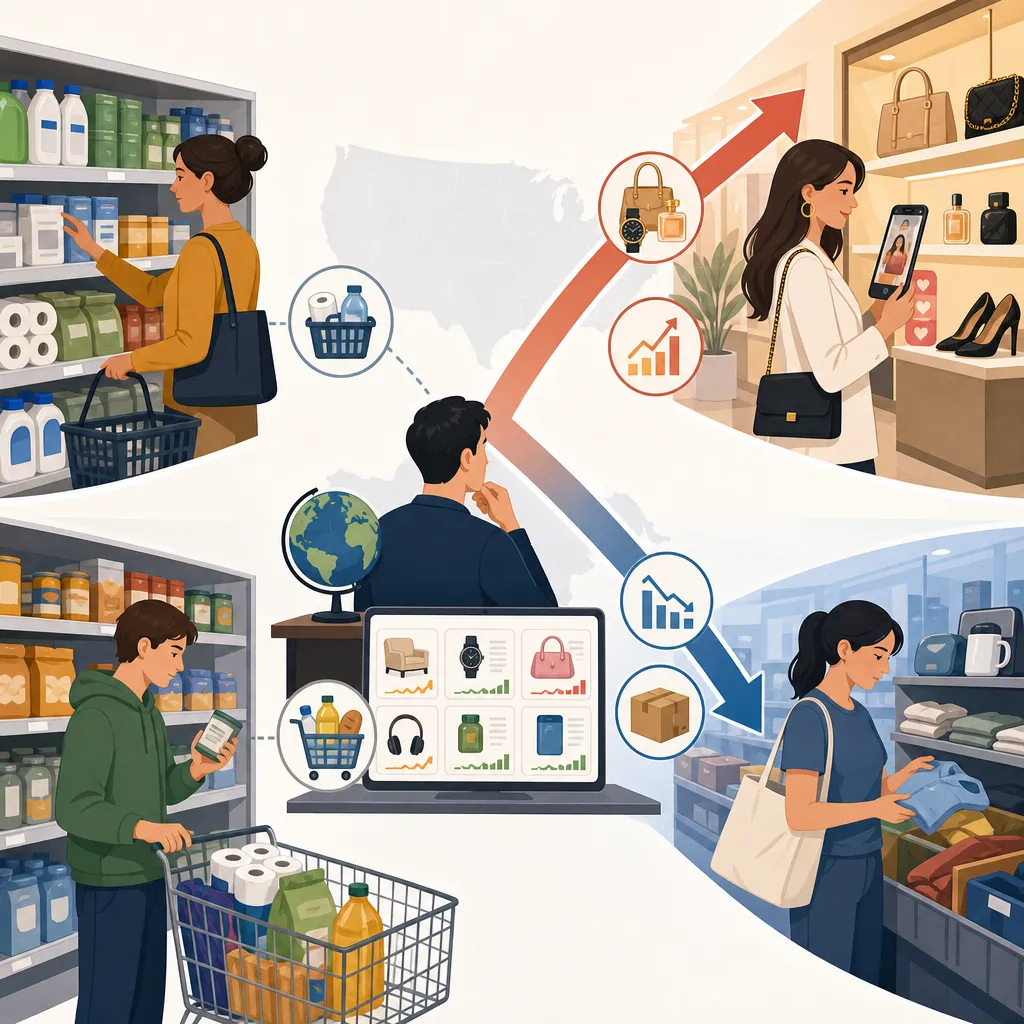
For most cross-border sellers, the first question in 2026 should not be “Should we expand?” but “Which part is worth expanding?”
It is easy to read 4.4% retail growth as a sign of recovering consumption, rising demand, and a good reason to stock up early. But the backdrop of K-shaped divergence shows that consumer purchasing power, shopping preferences, and price sensitivity are still pulling further apart. In other words, even within the same US market, low-priced essentials, functional products, and impulse-driven content commerce products may follow completely different curves.
If you are a cross-border seller, this directly affects three things:
- Which SKUs should carry more inventory
- Whether your channel mix should lean toward established platforms or content-driven platforms
- Whether profit calculations should be based on the “average order” or “orders by channel”
If you mistake topline growth for a full recovery, the common result is simple: more stock sits in the warehouse, order volume fails to keep up, and cash flow gets tighter instead.
Calculate Profit First, Then Talk About Replenishment: A Safer Play for 2026
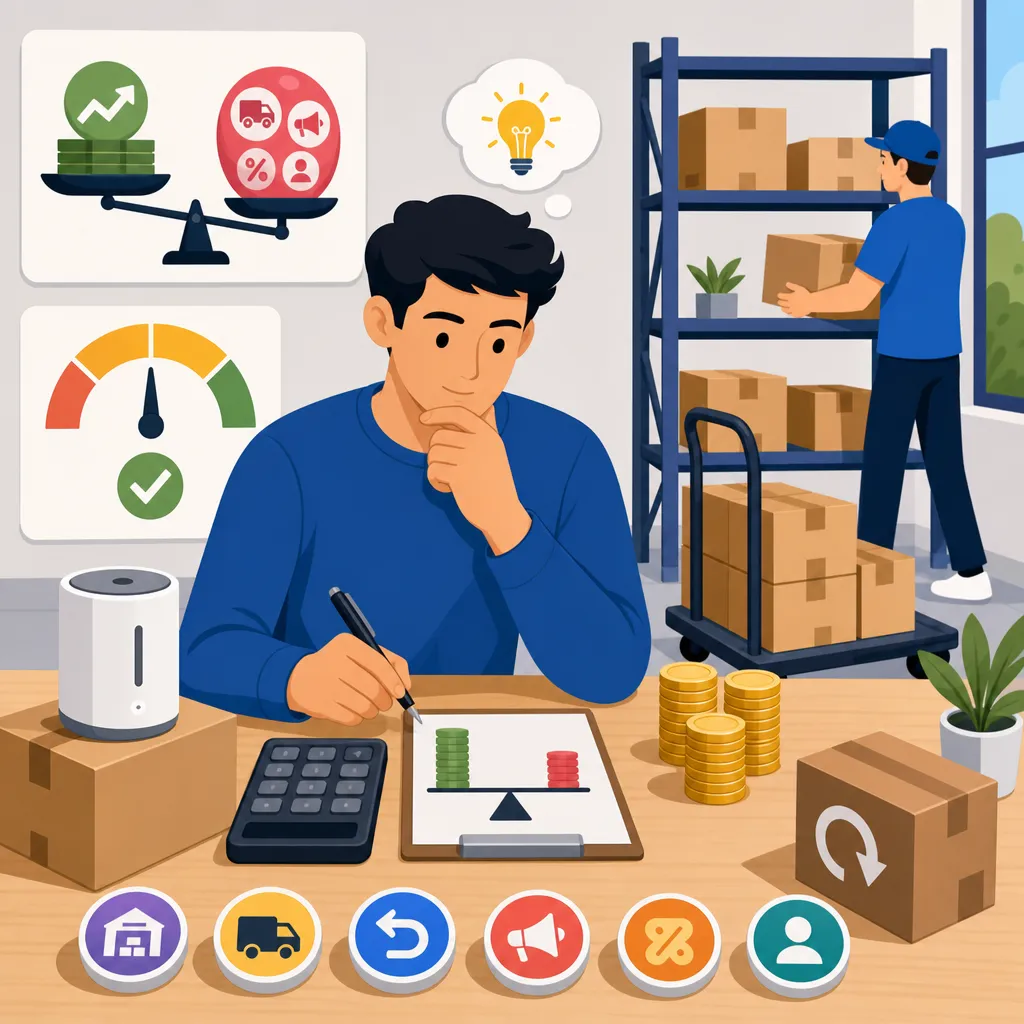
Inventory decisions should be based on profit per order, not just expected sales volume.
When the industry starts warming up, many sellers look at GMV first. But the risk in cross-border business has never been just “Can it sell?” It also includes logistics, platform fees, refunds, advertising, creator commissions, and exchange-rate swings. This matters even more as creator partnerships increasingly shift toward a CPS model: front-end conversion may look lighter, while back-end profit gets diluted more easily.
That is why replenishment decisions in 2026 need to work backward from one question: “Is each order actually profitable?” At a minimum, you need to answer two questions first:
- How much real profit do you keep from a single order?
- Under your fixed-cost structure, how many orders do you need to avoid losing money?
Here is an illustrative example only, with numbers used to explain the logic rather than reflect real data: suppose a product sells for $25. After subtracting a platform commission of $3.75, about $4 in inbound shipping and storage, $3 in allocated ad cost, a creator CPS commission of $2.5, and $1.5 in return-related losses, the profit kept from one order is about $10.25. If monthly fixed costs such as team, software, and warehouse rent total $8,000, you would need to sell about 780 units to cover costs. Once you know these two numbers, the question “Should we add inventory because the market is growing 4.4%?” becomes a very concrete math problem instead of an emotional judgment.
If you have not calculated these two numbers clearly, even the best growth outlook is still just an emotional reference, not an operating basis. The 15+ free seller calculators from Niceggie fit this step well. You can use them to map the relationship between profit per order, break-even volume, and inventory budget before deciding whether to increase stock.
The Key to Channel Expansion Is Not Opening More Stores, but Judging Where Structural Opportunity Still Exists
The channels most worth expanding in 2026 may not be the platforms you have not entered yet, but the ones you already use and still do not understand deeply enough.
A common channel-expansion path for cross-border sellers starts with established platforms such as Amazon, eBay, and Walmart, then gradually shifts toward Shopify or TikTok Shop. But platform opportunity is not about “the newer, the better.” You need to see whether three variables match: platform policy, category competition, and content acquisition cost.
This is where market intelligence matters. Changes in platform fees, logistics rules, and shrinking content traffic bonuses can all directly reshape the real profit potential of a channel. If you only watch surface-level sales growth, you can easily miss the net-profit decline caused by rule changes.
Niceggie’s daily intel center organizes platform fee changes, logistics policy updates, peak-season rule changes, and traffic trends in creator commerce into seller-friendly daily summaries. That way, you do not need to dig through announcements in multiple platform dashboards just to judge, under one consistent framework, whether the opportunity window across channels is widening or narrowing.
Under K-Shaped Divergence, Listings and Creator Partnerships Need Two Different Paths

For the same product, when facing a divided consumer base, you cannot rely on just one version of selling points and one traffic strategy.
The most direct sign of K-shaped divergence is not just different levels of price sensitivity. It also shows up in different decision paths. Some users care more about low prices, fast delivery, and basic specs. Others are pushed to buy by content discovery, scenario-based images, and creator endorsement. If you run every channel with one listing and one set of creative assets, you will often miss one side or the other.
So the optimization focus in 2026 is not just “write a better listing.” It is building versioned messaging for different platforms and different customer groups. For example:
- On search-based platforms, prioritize keyword coverage, spec clarity, and conversion-oriented information density
- On content-driven platforms, prioritize lifestyle images, bundle images, and short-form content triggers
- In categories with price-sensitive shoppers, highlight durability, substitutability, and total cost advantage
- In interest-driven categories, highlight emotional value, social shareability, and use scenarios
If you want to test these versions faster, you can use Niceggie’s AI Listing Diagnostics to work on titles, selling points, keywords, and image assets, so channel-specific messaging no longer depends on rewriting everything manually.
Creator Partnerships Will Not Automatically Drive Growth; Commission Structure Is the Key Variable
Creator partnerships will still offer opportunity in 2026, but whether they are worth doing depends first on net profit after CPS, not exposure volume.
When you pay creators commission, it may look like you are shifting risk from fixed ad spend to pay-for-performance. In reality, if your product margin is already thin, CPS will squeeze net profit even further. This is especially true in TikTok Shop, where creator-driven sales, platform fees, fulfillment costs, and returns stack together. Many products that “have sales” still do not leave enough profit behind.
So creator partnerships fit two types of sellers better:
- Sellers who have already validated profit per order and know what commission rate they can تحمل【待补充:原文中无此异常,需确认是否保留或修正】
- Sellers with a clear audience profile who know which creators bring more than just low-quality traffic
If you are preparing to test the TikTok channel, the priority is not mass outreach to creators. It is screening first, then testing volume. Niceggie’s TikTok Creator Outreach can batch-match creators by category and sales data, send invitations, and follow up automatically. That makes it more suitable for small teams to run low-cost samples first, then decide whether to widen the collaboration scope.
This Recovery Wave Does Not Affect All Three Roles in the Same Way
Facing the same US retail growth outlook, upstream suppliers, operations teams, and consumers are not looking at the same picture.
For seller operations teams, the biggest change in 2026 is not “more opportunities.” It is a higher bar for decision-making. You need to break down profit more frequently by channel, by SKU, and by acquisition method, instead of continuing to budget with the broad average models used in the past.
For management, cash-flow discipline will matter more than blind expansion. The easiest mistake during a market rebound is turning a growth expectation into early purchasing and ad-spend commitments. If structural divergence becomes stronger than expected, inventory and expenses will be the first things that drag the organization down.
For consumers, divergence will continue to show up as two coexisting buying logics: one side keeps chasing value for money, while the other is more willing to pay for content experience, brand feel, and immediate interest. That means sellers can no longer cover the whole audience with one pricing strategy.
Niceggie’s View: Sellers Do Not Need More Tools, but a Shorter Decision Chain
What is truly scarce is not information, but the speed of turning information into executable decisions.
Our view of 2026 is direct: growth will come, but it will not land evenly across every seller, every category, and every platform. The capability cross-border teams need to build next is a closed loop that connects market intelligence, profit calculation, listing optimization, and creator testing. Validate in a small scope first, then scale step by step, instead of amplifying every action at once based on one optimistic signal.
If you are already operating in the US market, this stage is more like a qualification round. Moving fast does not always win. Calculating clearly, adjusting quickly, and pulling back in time matter more.
The question truly worth discussing in 2026 may not be “Will US retail keep growing?” but rather: when growth only lands in some channels and some products, which side should your budget back first?
Want to Run Through Your Replenishment and Channel-Expansion Decision First?
If you would rather validate profit potential first before deciding whether to add inventory, launch into new channels, or test creator partnerships in 2026, you can start with seller calculators to calculate profit per order and your break-even line clearly, then combine that with channel intelligence from the daily intel center to decide where your budget should go first.
FAQ
US retail growth is reaching 4.4%, but who and what is actually being “filtered”?
Under Coresight’s K-shaped divergence logic, incremental demand is more likely to flow to two ends. One end is low-priced, high-frequency, clearly functional essentials with fast delivery, clear specs, and stable repeat purchases. The other end is interest-driven products powered by content discovery, scenario-based presentation, and creator endorsement. The middle zone, SKU “average products” with neither price advantage nor a content strategy, is actually the most likely to get squeezed even as the overall market expands. So sellers should first identify which end their SKU belongs to, instead of making a broad judgment about whether to add inventory.
How exactly do you calculate profit per order and the break-even line? Can you give a framework?
The framework has two steps. First, calculate profit kept from one order using “selling price − platform commission − inbound shipping and storage − allocated advertising cost − creator CPS commission − return-related loss.” Second, calculate the minimum number of orders needed to break even using “monthly fixed cost ÷ profit kept from one order.” For example, if profit per order is around $10 and monthly fixed cost is $8,000, you need about 800 orders to break even. If that number is far above the actual order volume of your current channels, this is probably not the right time to add inventory. You first need to solve either the conversion problem or the cost-structure problem.
If both are replenishment decisions, should low-priced essentials and content-driven products be judged by the same signals?
No. For low-priced essentials, you should focus more on delivery speed, spec coverage, and repeat-purchase data, because these products are affected more directly by price competition and fulfillment experience. For content-driven products, you should focus more on actual retained profit after creator sales and the conversion rate of content assets, not exposure volume or short-term spikes in orders. The main risk in these products usually comes from CPS commissions and return rates, not from whether they can sell at all.
Should you expand to more platforms first or calculate profit first? If you want to do both, what is the right order?
It is better to calculate profit first and discuss channel expansion after that. Channel expansion itself has costs, including learning new platform rules, testing new creative, and spending time on creator outreach. If you have not even calculated profit per order and break-even for your current channels, expanding to new channels will most likely repeat the same problem in more places rather than diversify risk.
In 2026, how do you judge the threshold between “worth doing” and “not worth doing” for TikTok creator partnerships?
A simple threshold check is this: first calculate your retained profit margin without creator commission, then see whether that margin can still cover a 15% to 30% CPS commission and leave room afterward. If your gross margin is already thin, for example if your retained profit margin is below 20%, creator partnerships will most likely mean “trading profit for exposure.” That may look good in the short term but will be hard to sustain. Only when the product has enough margin room do creator partnerships become a real incremental channel rather than a transfer of profit to creators and platforms.